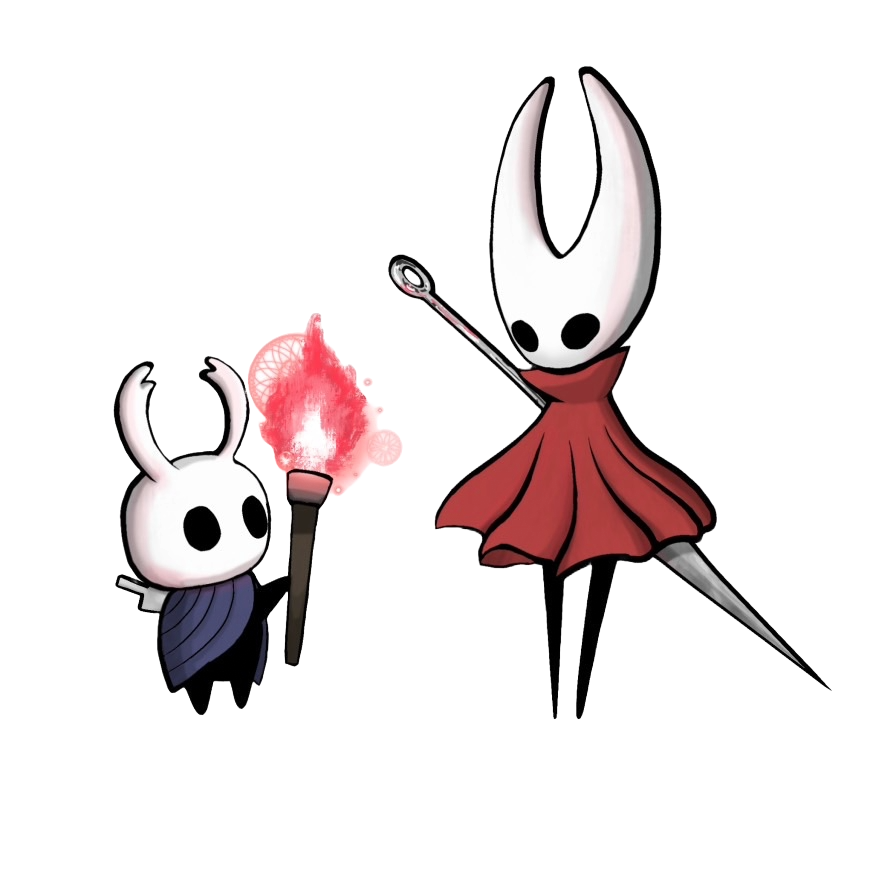
Faceplant into the brilliant world of Hollow Knight: Silksong, the highly anticipated sequel to classic indie game Hollow Knight. Released six torturous years after its initial teaser, Silksong’s advent crashed multiple online game stores and sent the gaming world into a two-day hiatus. Adults took leave. I shirked academic responsibilities to play it.
Silksong’s first 10 minutes pay homage to the hallmarks of Hollow Knight’s storytelling. There’s more ominous poetry. Once again, a protagonist (Hornet) is plummeting to the bottom of a kingdom in dire straits. Yet immediately, Silksong is saturated with vibrant colors saturated and vibrantly colored, indicating that Pharloom is decidedly alive with vegetation and industrial activity. Exciting new fixtures of level design include brass bells, copious amounts of lava and ornate architecture. 32 mappable areas provide an exploration experience so comprehensive that Hornet may find herself in jail, snowy mountains, clockwork citadels or swamps.
Hollow Knight composer Christopher Larkin returns to score Silksong, bringing with him atmospheric regional tracks and 19 unique boss themes. String instruments and choirs give an audible dimension to motifs of silk and song, and lend themselves equally to religious reverence and rousing, strident battle. Standouts include Widow’s tense violining, Red Maiden for reprising Hornet’s original boss theme in Hollow Knight, and Skarsinger Karmelita for singing her own boss music.
Silksong’s narrative departs from Hollow Knight with an active protagonist who must come to terms with her past as a non-playable character in the prequel. Progression occurs in three distinct acts. Throughout, Hornet traces a well-defined character arc, invoking themes of mothers and daughters, inheritance and responsibility. Pharloom itself is an unexpectedly detailed depiction of religion appropriated by authoritarian government, late-stage capitalism and the desperation of a kingdom long in decline. Complementing the narrative progression is an impactful cast of non-playable characters, who become tangibly affected by Hornet’s actions and the state of Pharloom. “I thought that was nice to see the story sort of have a greater manifestation in the game,” senior Keshav Ramaswamy said.
Nevertheless, the actual history of Pharloom must be pieced together by players who love reading. “I never fully got immersed in the actual lore of the game,” senior Clara Charpentier said.
Silksong supplements weaker narrative immersion with new movement capabilities that make traversing Pharloom an extraordinarily fluid experience. Hornet enjoys an expanded moveset of sprint, drifter’s cloak, faydown cloak, clawline and a mid-air heal. Combat experience becomes flexible as well, with seven crests and 57 tools to accommodate playstyle. “I think [crests are] so well done because no one on the internet can agree which one’s the best one, and it fits with any kind of play style, which speaks to me in the sense that they’re balanced,” senior Kenneth Shue said. “[It] makes the combat much more interesting than Hollow Knight, and allows for more flexible enemy design.”
My interviewees and I now take this time to advocate for our favorite Silksong boss fights. Prospective players should keep an eye out for Lace, Widow, Clockwork Dancers, First Sinner and Skarrsinger Karmelita–these bosses are favorites amongst veteran players. Common features of the list include novel boss mechanics, brisk pacing, rhythmic cadence, keyboard-threatening difficulty and emotional weight. “It takes me a bit to learn those sequences, but once you get them…the way the character moves is very fluid,” Charpentier said.
Yet most discourse over Silksong inevitably centers on its unprecedented difficulty. Players of the original Hollow Knight may be sent careening into environmental hazards and enemy hit boxes by the default downward-diagonal pogo. Contact damage punishes Hornet’s larger hitbox. Two minutes into the game, players may also discover that Moss Mother deals two masks of damage, putting the green mosquito on par with late-game Hollow Knight bosses Pure Vessel and Absolute Radiance. Even non-boss enemies possess two-mask potential. “The mechanics of the game are much more difficult to get the hang of if you don’t already have exposure to either Hollow Knight or similar games in the genre,” Ramaswamy said. “[There were] more difficult and punishing enemies.”
Combat becomes Silksong’s primary progression check. No longer are major areas blocked by imposing doors with mysterious keys–it’s probably an enemy gauntlet with warrior ants. The trenches of Silksong boss design is Groal, who inflates his own difficulty with tedious area mechanics and a five-wave gauntlet (must be repeated with each death). Players suffer a long run-back infested by swamp maggots and guerrilla swamp demons. You might as well just die along the way.
Silksong’s primary struggle is to maintain a satisfying balance between punishment and reward. Yet there’s something to be said about playing hard games to foster self-mastery, and the importance of understanding Silksong as a monumental achievement of developer passion amidst an oversaturated market which, day by day, tends more toward invasive monetization.
Silksong marks a milestone for the gaming landscape, in which three-person development teams may deliver whole games of magnificent scope and artistic integrity without the need to micro-transact or price-gouge its audience, although we beg Team Cherry to pay them more money. It is a love-letter to playing stupidly hard games made with care and passion. Play it.
“It’s cheap, it’s amazing and I think a lot of people would find entertainment in the game,” Shue said.
If you would like to voice your opinion on an issue you feel is relevant to our community, please do so here. Anyone is able and welcome to submit a Letter to the Editor, regardless of journalistic experience or writing skills. Submissions may be published either online or in a print issue.