Every year, our school’s canned food drive is announced with a challenge of getting the most cans for your class. Students rush to bring in whatever cans they can find, teachers announce it briefly and posters get hanged on the wall but it often leads to a handful of the same classes leading the competition.
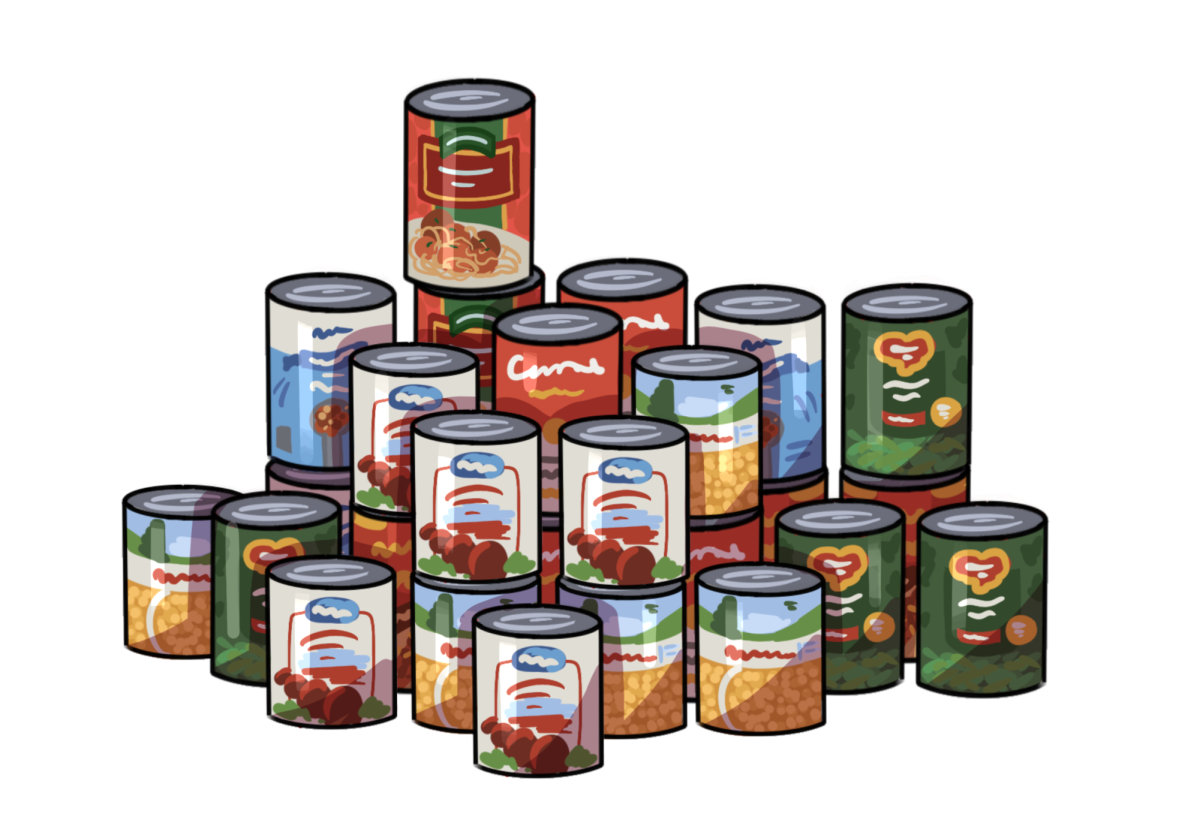
You might think food pantries would want quantity over quality but, in fact, most food pantries request shelf stable, high protein and nutritious items. Top requests include canned tuna, chicken and beans, as well as peanut butter, rice and low sugar cereal. These foods benefit canned food drives more which means that people in need could have better food.
However, when a drive becomes a competition, we lose sight of the people who are actually receiving these goods. The competition pushes students to focus on quantity over quality, turning a meaningful act of giving into a point-scoring game. And while our intentions are good, a pile of random cans does not always translate into real benefits for the people who depend on food assistance.
The competition structure also creates an uneven level of participation. Instead of the whole school coming together, the drive usually ends up dominated by the same three or five classes that actually push their students to participate. To an outside observer, it can seem almost like some teachers are oblivious to the food drive, as many choose not to speak on behalf of the drive. This ends up with a number of students–including those who might be interested in contributing–left in the dark regarding the ways that they can participate in this supposed school-wide effort. “I saw all the posters around the school but I didn’t know who to give my cans to,” sophomore Riya Viajan said. “So I didn’t participate.”
Many students and classrooms do not participate because of this lack of awareness. When only a handful of classes are participating, the drive becomes less of a school-wide effort and is reduced to a contest between only a few motivated classes, decreasing the overall impact that the drive is able to have.
Statements from The Maryland Food Bank make this issue even clearer. Although they emphasize how deeply they appreciate school food drives and how much they rely on students to help support families across the state, they also acknowledge that every item they receive is not always ideal or up to their standards.
Many of the donations they receive are not fully approved or fall short of the nutritional guidelines they set. Yet, they still do whatever they can to use these sub-par items, passing them on to smaller banks or giving them directly to homeless shelters.
What food drives like The Maryland Food Bank really hope for is a higher supply of nutritional, meal building items rather than low-quality or unpopular goods. Their message highlights the exact problem with the competition driven model. When students rush to bring anything they can find and only a certain number of classes are participating, the drive produces a good amount of cans but not always the kind that families truly desire.
If RM truly wants its annual food drive to matter, we have to shift from treating it as a competition to treating it as a community effort. That means clearer communication from teachers, a focus on high-value donations, and educating students on what food banks need. Our food drive shows the generosity of our school, now it’s time to make that generosity effective. With a few changes, RM can transform a tradition of rushed donations into a meaningful act of service that genuinely supports the Maryland families counting on us.