Someone slams the buzzer, but the molecular biology question has only been half-read. With just enough confidence to risk it all, they answer, knowing that it could make the difference between winning and losing the match.
Science Bowl is a fast paced competition for high schoolers sponsored by the Department of Energy that tests students’ scientific knowledge in six subjects including physics, biology and chemistry. After the teams are asked a question, one team must buzz in to answer it, gaining or losing points depending on whether their answer is correct. Upon a correct answer, teams also get a chance for an extra-point bonus question, which are often more advanced in difficulty and can make or break a team’s performance.
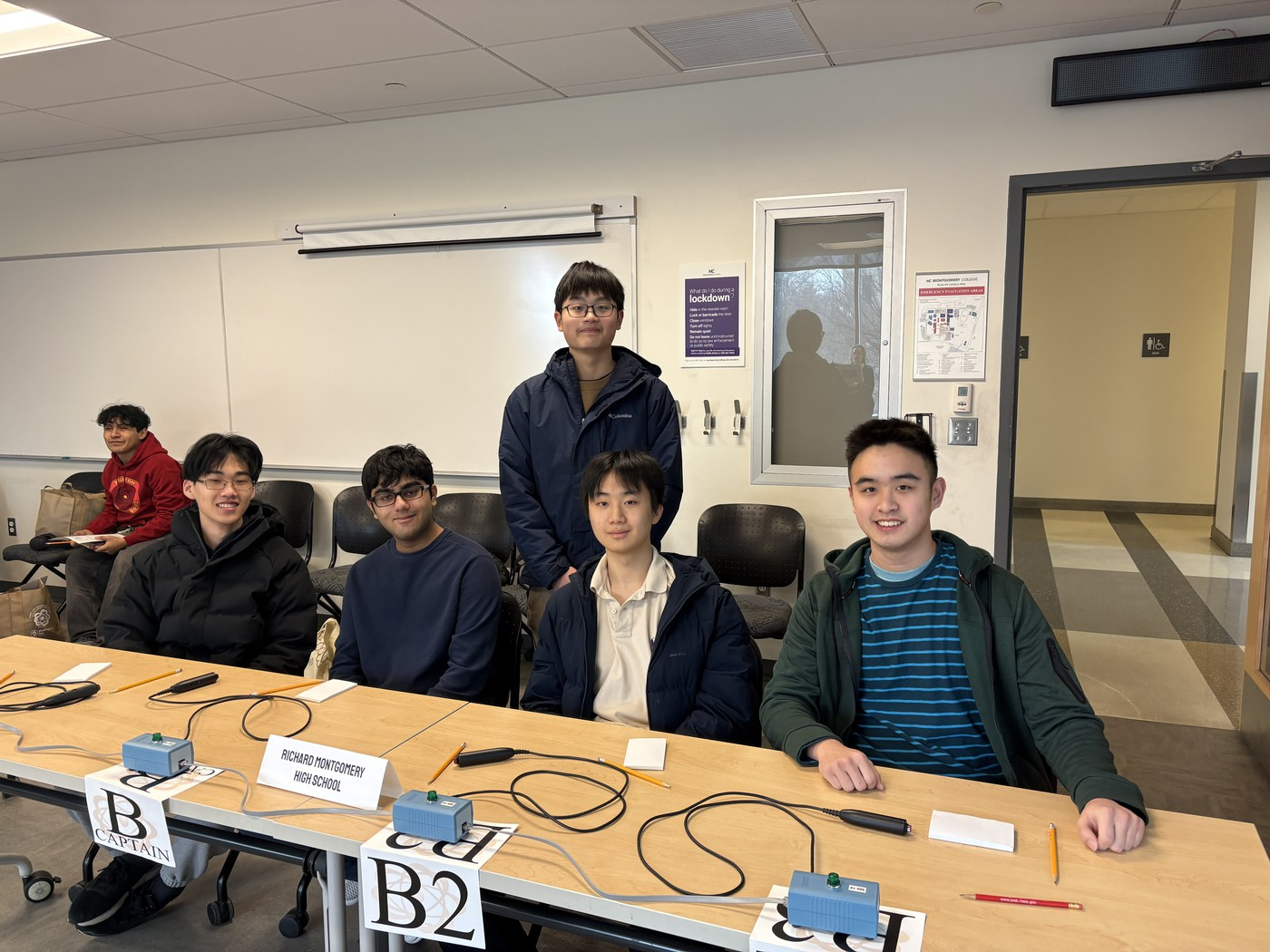
This year’s RM Science Bowl team has performed impressively at a number of competitions, including the main regional Department of Energy competition. “This is the strongest team I’ve ever seen here. We made it to the semifinals, missed the finals by two points—88 to 90—against the Blair team,” Science Bowl Club sponsor and science teacher Karl Kovacs said. They also did exceptionally well at the Prometheus competition, where they competed against 30 of some of the best teams across the country. They managed to place 6th overall with a 7-3 record, even getting top placements in individual events—including a 2nd place finish in biology and a 4th place finish in chemistry.
As the club sponsor, Dr. Kovacs largely lets many of the students make their own decisions regarding the team. “This team has been building on their own merits, with their own drive. It’s been fun to watch because they’re so good, at such a high level, that all I had to do was become a spectator and provide them space,” Dr. Kovacs said. “But really, my involvement now is I register them, I sign off, I show up on a Saturday, I cheer them on, and I just enjoy it.”
Kovacs allows the team autonomy outside of that, letting the students decide how they practice and which invitationals they attend. “Usually for a lot of other things, it’s just us, looking for opportunities and resources,” senior and Science Bowl captain Keshav Ramaswamy said.
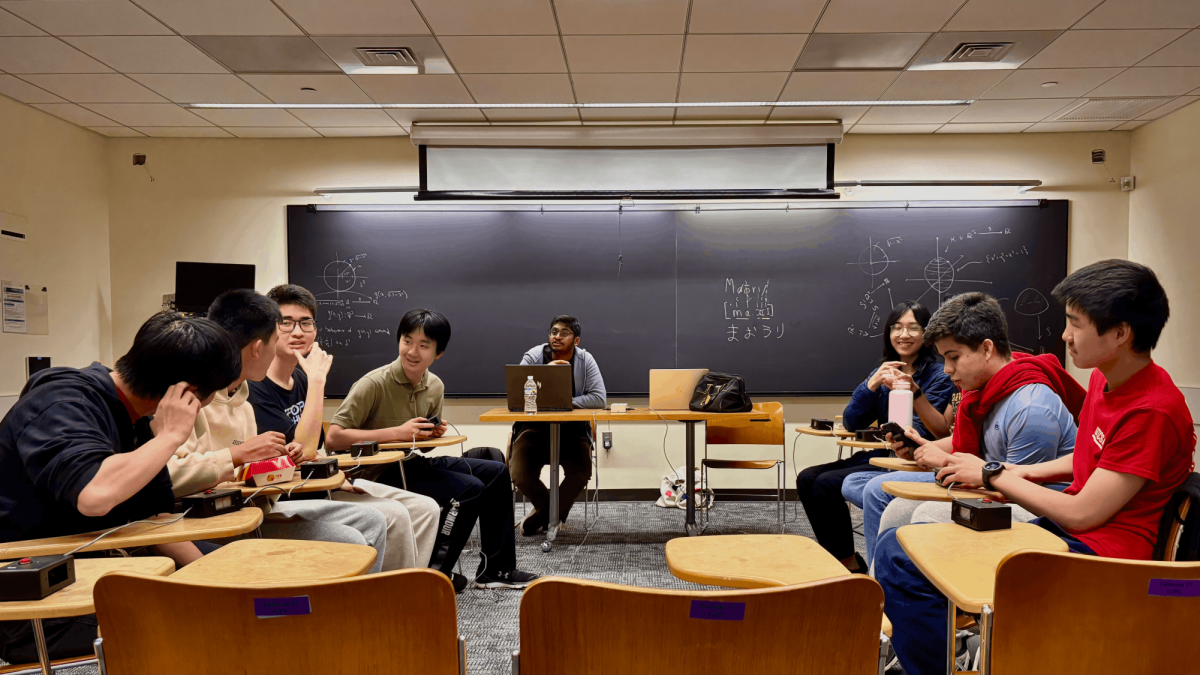
To prepare for competitions, the Science Bowl team holds weekly Friday practices, which they use to simulate the competition environment. “We have our own buzzer system, which we try to use and try to mimic the actual environment,” junior Sedric Su said. They also have more frequent practices leading up to competitions. “We usually practice some more online at night using Discord calls, and we have a similar software to a buzzer system that we use,” junior Ethan Pei said. Incorporating the buzzer during practices helps the students adjust to the pressure of using it, and also to practice thinking on the fly. They also try to learn from their mistakes together. “Whenever somebody gets something wrong, like a subject or someone doesn’t know something, we can learn it as a group,” senior David He said.
Competitions can often be intense, with the fast-paced buzzer system requiring them to handle the pressure. Sometimes, competitors employ self-imposed rules to figure out when they should answer a question. “Our cue is basically, if you have 51% confidence, just buzz in, because it’s basically a buzzer race against the other team,” Su said. As questions become more difficult and require calculations, competitors need to rely on their confidence in their own skill to actually work the problem out before they even buzz. “You have to buzz in before you’ve fully solved for the answer, because if you buzz in after you get the answer, you’re going to repeatedly be outbuzzed by the other team,” He said.
Whenever one of them answers a question incorrectly, instead of feeling irritated, the team uplifts each other. “We always support each other during competitions, even when we get questions wrong,” Pei said. “We always help each other out and try to find out what we did wrong.” They also make sure to be vocal whenever a teammate gets an answer correct, showing a sense of comradery between them. “It’s similar to volleyball, how people celebrate after every point. We also celebrate after every point as well,” Pei said.
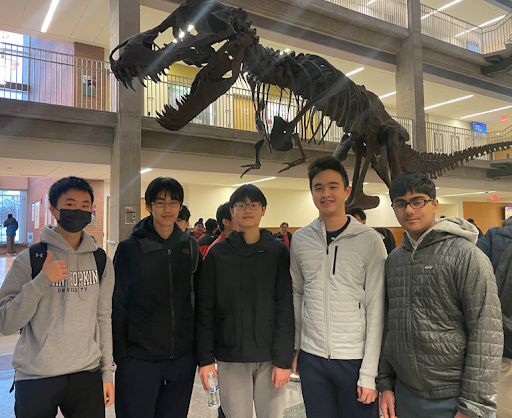
Science Bowl matches can often end up being nail-biters, especially when two teams are evenly matched. One of the most intense matches for the team was during their recent Johns Hopkins competition, where the team competed against Thomas Jefferson High School, one of the highest ranked teams in the nation. The match came down to only one question, and though the team did lose, they still reflect on it favorably. “They are a really strong team, and we got really close to beating them, so it was good, you know, we got our respect for getting close,” Ramaswamy said.
When two teams are neck-and-neck and the competition is close, it also creates tension for onlookers as well. “And then it’s a nail-biter, I’m not going to lie, because you can watch one of these 15-minute sessions and have the lead go back and forth and back and forth, and it’s just—who’s going to get the last question? Who’s going to get the last bonus question right to get that extra 10 points?” Dr. Kovacs said.
To succeed, the Science Bowl competitors also need to rely on teamwork. During bonuses, there’s a chance to talk with the team. “Because when you get into situations where it’s a bonus question for ten points, you get time to discuss it—whose answers are you going to take? That’s where you have to work together to come up with the most likely correct answer,” Dr. Kovacs said. The team often has to trust each other when it comes to giving an answer, fostering a strong team dynamic amongst the competitors. In addition, each member also has their own strengths and weaknesses across different subjects. Students such as Pei are stronger in bio, while Su focuses primarily on physics. These different areas of expertise help the students cover all of their bases, so they are prepared for any type of question that is asked.
Not only has Science Bowl taught the competitors useful science knowledge, but it has also taught them life skills which can be applied outside of matches. “[Science Bowl] has taught me how to divide and conquer for difficult tasks, and I’ve applied what I’ve learned in Science Bowl to schoolwork as well for projects,” Pei said. Ramaswamy also mentions how time pressure teaches him quick decision making and communication. “You only have like 20 seconds or so to confer and generate an answer. So 20 seconds is not a lot of time. So you really have to learn how to communicate effectively and quickly,” Ramaswamy said.
One of the major challenges for the Science Bowl team has been recruiting new members. The team size is already small, having only 5 members. There’s also a lot of space for a bigger team: They are allocated up to 3 teams at competitions. This year, they were only able to have one, as at least 3 people are required per team. In addition, some of their most long standing members will also be graduating this year as well. “We’re going to lose a couple of seniors—really strong seniors—and we’re going to need more people.” Dr. Kovacs said.
Dr. Kovacs encourages anyone who is interested to reach out to Science Bowl, especially underclassmen who can continue fostering the strong team dynamic that the current team has built up over the years. He believes that anyone could become a strong member of their team, and all they need to do is be willing to take the risk. “Come to one of our meetings. You are good—we can put you on a team. But that means you just have to be willing to take a chance, be part of a team, and grow with that team,” Dr. Kovacs said.