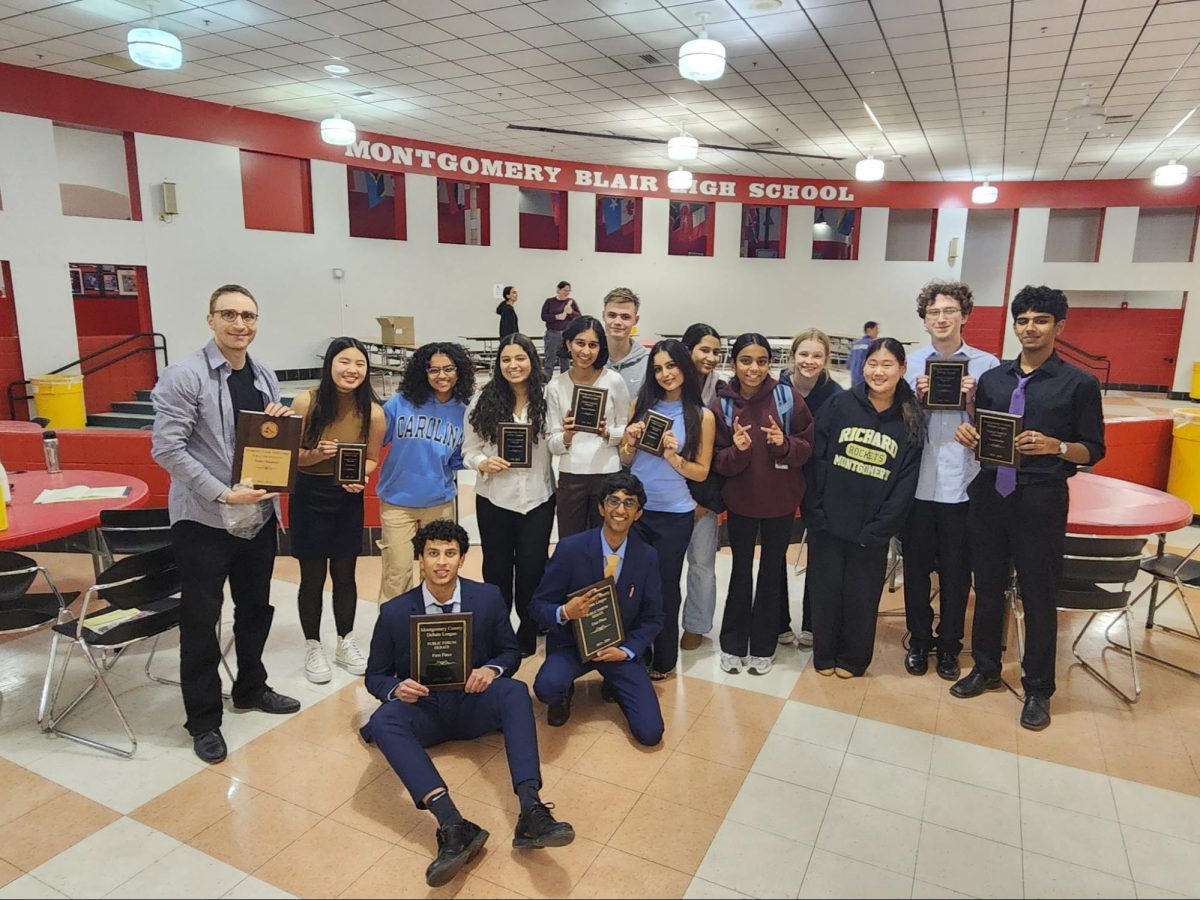
As the judges began to read out the names on each plaque, everyone in the room collectively held their breath in anticipation. The auditorium was packed with students and coaches, but it was quiet enough to hear a pin drop. When they announced junior Ganesh Ramamurthi and senior Aarav Kyrpalis as first place, the RM team burst into excited cheers.
After months of hard work and practice, including mock debates and peer reviewing other’s contentions and arguments, the RM debate team emerged victorious at the county debate playoffs on Feb. 25 and 26 for its third consecutive year. They also achieved the most wins for this season, surpassing all other county teams.
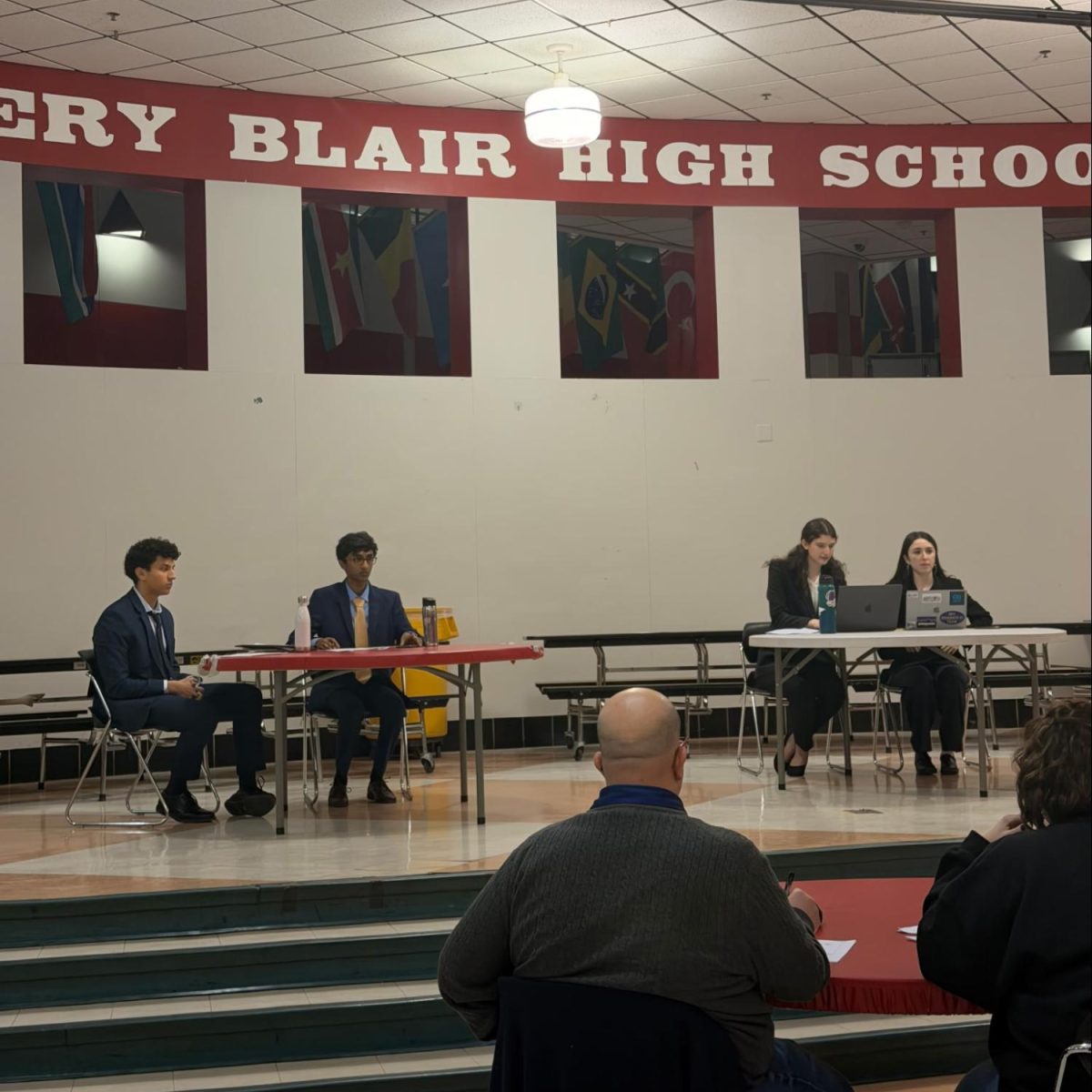
This impressive performance is a result of many factors and a significant amount of time and effort, but it all started with extensive research. Each member of the debate team has a partner who they prepare and collaborate with, allowing for a deep bond to develop. Playoffs push these relationships to their limits, requiring significant time commitments and effort.
Members often spend several hours each week reading articles and congressional reports related to their topic, analyzing the arguments either in favor or against whatever debate question they are trying to answer. “We do lots of research, it’s one of the biggest parts of debate. My partner and I are usually calling for two and a half hours twice every week,” Ramamurthi said. “Essentially, we just dig into the topic, try to figure out the background and bounce ideas off of each other. We sort of argue with each other as well. We take sides and we see how strong each argument is.”
Over the course of any given school year, coaches of debate teams across the county vote on five debate topics for standard competitions. Each topic is debated on twice, resulting in ten total matches. Winning six of these matches allows a team of two partners to advance to the first day of playoffs. The first day includes the top 64 teams in the county, all competing against each other to see who will advance to the second round. Each team competes three times, and winning all three is the primary way to advance to the next day, where the top 16 teams will compete for first place.
Even though the rules of playoffs mean that RM teams will inevitably face off against other RM teams, every member of debate recognizes how important collaboration is to the success of the team as a whole. The most important aspect of performing well at playoffs is ensuring the team cooperates with each other. Practicing with mock debates helps to get teams in shape for the event, which lets them evaluate their skills in an actual competition setting.
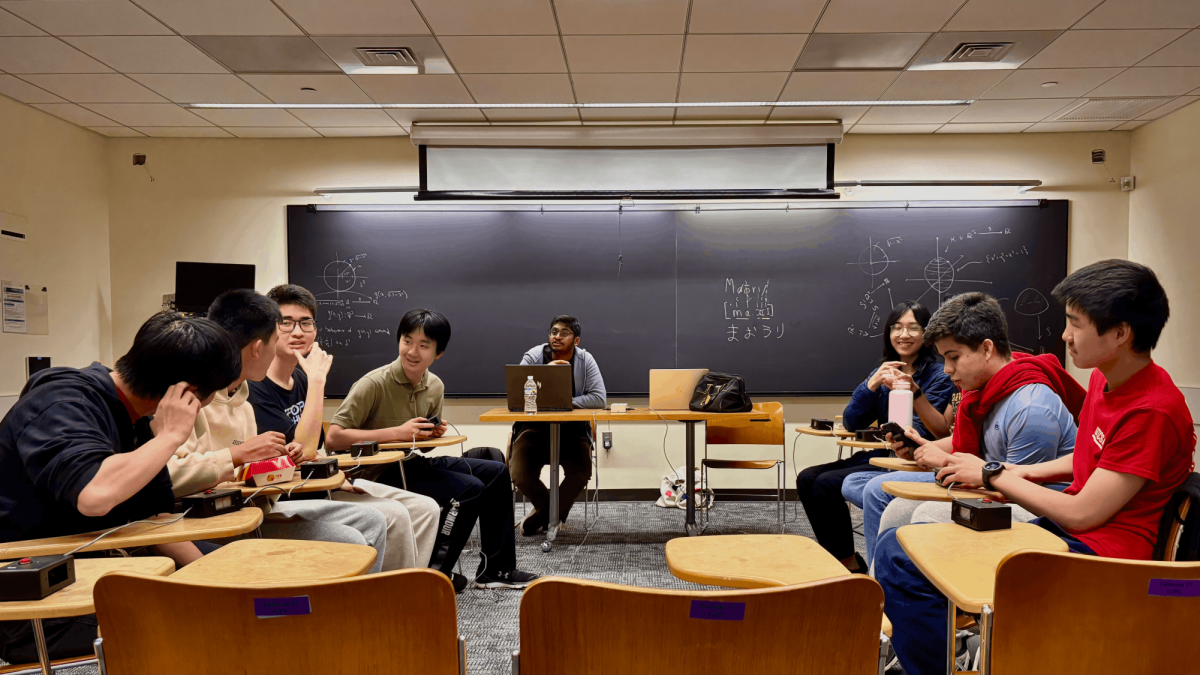
On Fridays, when the entire team gathers together for a discussion, members often use the time to bounce ideas off each other, identify major themes and find rebuttals. “We share a lot of materials with each other, which is helpful if you’re looking for that one specific source or statistic that you really need for your argument,” junior Solomon Burgess Eisenberg said. “There’s many other people on the team who are all researching and want to help you. If they find a site that they know is going to be good for your argument, it’s part of team culture to share it, which is what makes RM do so well in the playoffs.”
While not all debate members are able to participate in playoffs and some are eliminated on the first day, the team still manages to cultivate an environment of fun and encouragement. During the playoff debates, audiences are allowed to watch, meaning other team members often show up to cheer each other on. “During the competition, when a team advanced their people would be hyping them up and congratulating them. It really felt like you had a base of support and a team of people who are rooting for you to advance and move forward,” Burgess-Eisenberg said. “It was an awesome feeling and incredibly encouraging to have that team atmosphere.”
Last but not least, the role of the debate coach, Mr. Grosfeld-Katz, is integral to the team’s success. Not only does he effectively organize large meetings where all members of the team can interact and learn from each other, he also frequently sends emails and notices containing useful information or statistics that students find to be helpful. His dedication to the club played a significant role in ensuring RM won the playoffs.
“The most memorable moment? Definitely the end of the final debate when Ganesh Ramamurthi gave his final focus, which is the speech that closes out the debate,” senior Anshani Rao said. “Getting to hear what is basically a masterclass in how to debate was such a nice end to the final competition of the overall debate season, so it was a highlight listening to it.”