What does it take to stand out among a thousand people?
Each year, over 1000 rising freshmen across Montgomery County compete for a spot in the International Baccalaureate magnet program at Richard Montgomery. Success in the application process depends on more than just strong grades. It requires authenticity, curiosity and the willingness to improve.
The International Baccalaureate (IB) program is a globally recognized education framework designed to develop well-rounded, resourceful, and curious students. Through four programs, the Primary Years Programme (PYP), the Middle Years Programme (MYP), the Diploma Programme (DP) and the Career-related Programme (CP), IB focuses on perfecting the existing academic foundation and applying it outside of school.
The program develops students through a rigorous learning process across six subject groups: Language and Literature Studies, Language Acquisition, People and Societies, Sciences, Mathematics and The Arts. The curriculum is designed to prepare students not only for college, but also to cultivate skills that extend far beyond the classroom.
Gaining admission to RM’s program is not an easy task. With over 1100 students applying for just 125 spots, the odds of getting into the program are highly competitive and challenging. According to Joseph Jelen, the IB Magnet Coordinator at Richard Montgomery, applicants must demonstrate far more than just a 4.0 GPA if they want to stand out. “Through International Baccalaureate education, you come to really love RM and the curriculum,” Mr. Jelen said.
Mr. Jelen began his career as a social studies teacher, and over time, Mr. Jelen developed a passion for working with high schoolers. Eventually applied to become an IB Magnet Coordinator, a role he has been in for the past nine years. Through this position, Mr. Jelen has gained a strong understanding of what makes a good application.
“There are eleven hundred students who apply, saying ‘Hey, I would thrive in the program at Richard Montgomery’, and truth to be told, they would do very well,” Mr. Jelen said. To stand out among so many applicants, he says one important thing students must demonstrate are specific core values such as communication, risk-taking and open-mindedness. These core values are referred to as IB learner profile traits.
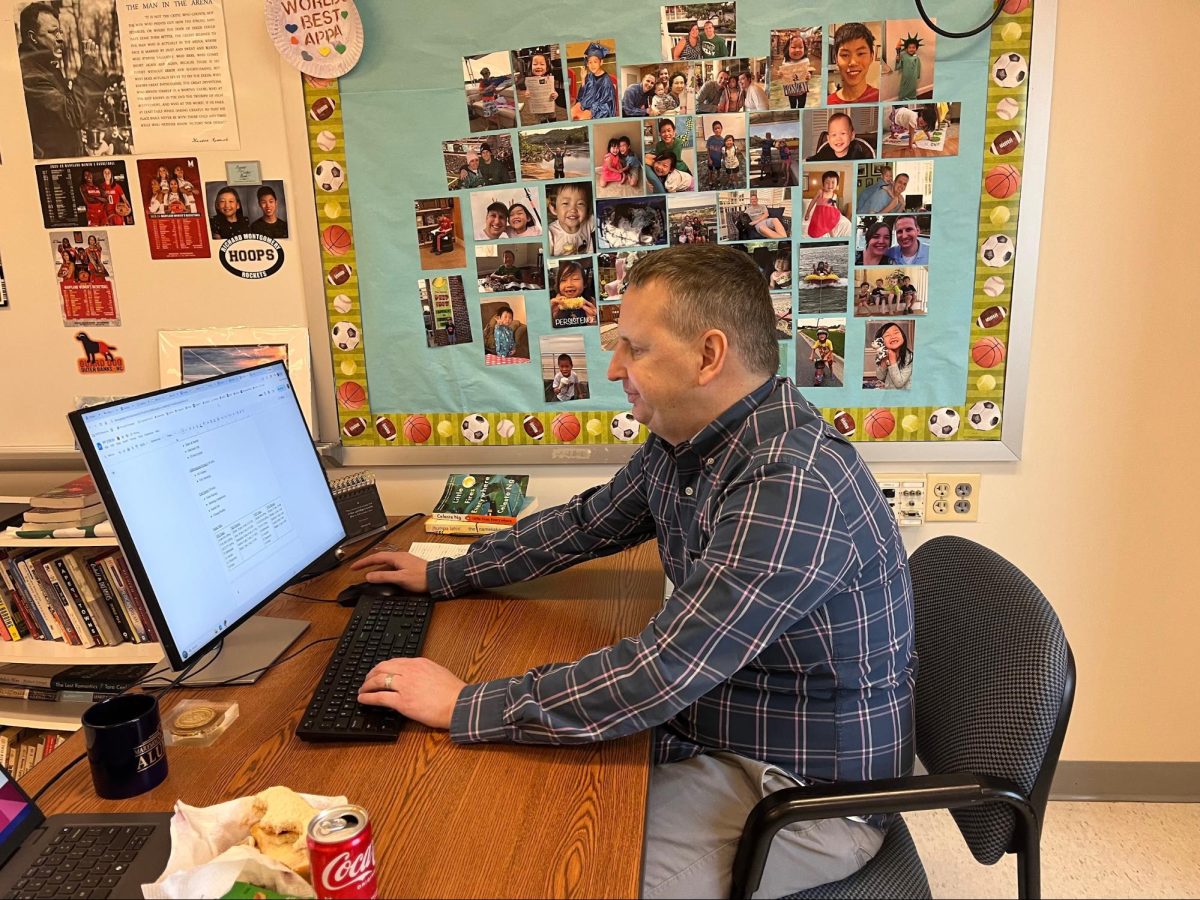
English teacher Mike Oakes, who previously served on the RMIB committee, says that the committee uses a rubric to evaluate a student’s responses, with the rubric’s contents varying each year. However, many factors remain constant throughout. Grades, test scores and the personal statements are all taken into account and then each application is given a score.
Among the factors, the personal statement carries significant weight, making it critical to show your genuine passion. “I think we’re just looking for you to be passionate about something that you have an interest in. Whether that’s more of a STEM thing or a humanities thing or something totally different. Just having a passion, interest, beyond just having good grades,” Mr. Oakes said.
Applicants are recommended to demonstrate why they want to attend RM specifically, and not just a magnet program in general. “It’s one thing you can do to show that you want to go specifically to the RMIB program, not just any other program in the county,” Mr. Oakes said.
One unique aspect of the process is that students are instructed to avoid identifying details, such as name, school or neighborhood. The admissions process was designed specifically as a name-blind, school-blind process to prevent bias. Even small hints about a student’s background undermines the structure of a blind application process, which Mr. Jelen says disrupts the fairness of applications.
For Mr. Oakes, the hardest part of the process was narrowing down the list. Since all applicants bring something unique to the table, he says it’s difficult to judge who would thrive the most. “I never feel like we’re admitting people who aren’t qualified. It’s more that I feel bad that we’re sometimes not able to admit the number of people who are qualified,” Mr. Oakes said.

Senior Sophie Huang emphasized authenticity in her application more than four years ago. She focused on community service by founding her own non-profit and honed in on her personal identity by volunteering in the Chinese-American community. Huang mentioned how a strong application doesn’t require rigorous extracurriculars. “It’s not necessary,” Huang said. “As long as you demonstrate your passions and present yourself as who you are, that’s enough. You don’t have to necessarily change who you are when you present yourself in the application.”
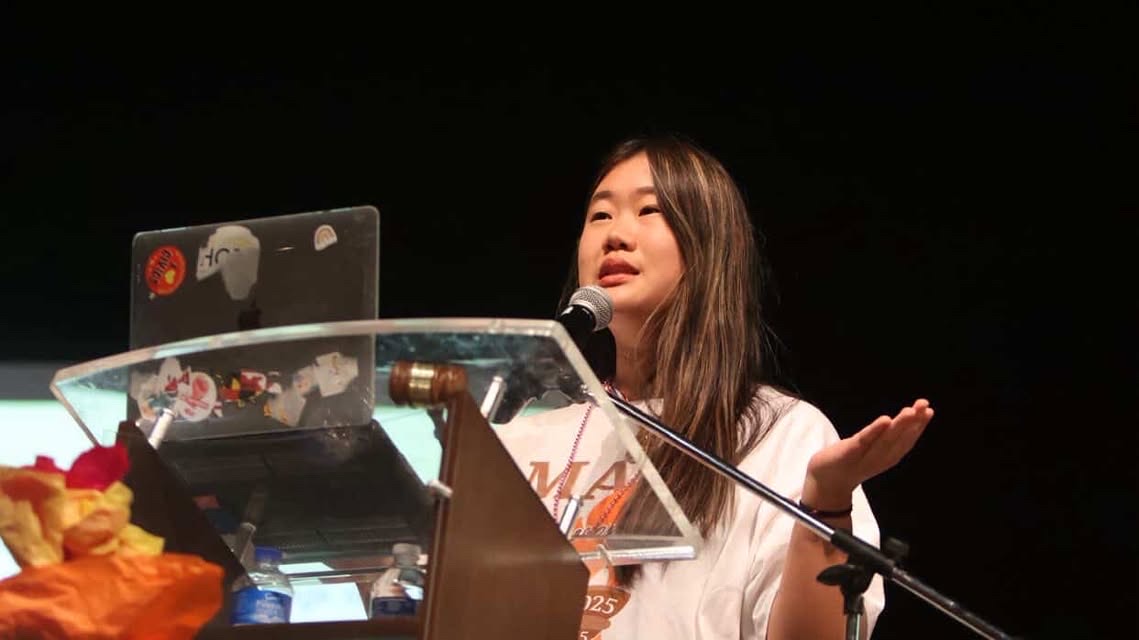
Freshman Ella Wan, former Montgomery County Junior Council President and a student now attending the RMIB program, agrees. “Just be yourself,” Wan said. “There’s this part where [the officers] ask for your hobbies. Here, you gotta show who you are: Your hobbies, your values and your dreams.”
For many, the program’s strongest attraction is its close-knit community. Huang says in her experience, familiarity between students strengthened the community and the supportive atmosphere. “IB creates a really strong cohort of IB students. I think it’s a good thing for being able to make friends with classmates and also getting to know them beyond a surface level relationship,” Huang said.
Mr. Jelen has observed this phenomenon for years. “Students will find themselves and find their place and niche,” he said. “I think it’s the coolest thing to watch students find their place and interesting place in the school.”
Another aspect of IB that draws many is its strength in the instruction of language. “The biggest thing about IB is that it really trains your work ethic, and especially improves your ability to write, way more than any other program,” Huang said.
The IB learner profile traits begin to emerge in students long before applications. At Julius West Middle School, which has around 25 reserved seats in the magnet every year, counselor Deborah Davies says that the staff tries to foster these characteristics. “Julius West, as an IB World and Middle Years Program School, has a focus on developing those IB characteristics that are geared into turning students into successful and positive world citizens,” Ms. Davies said. Guidance lessons are one way JW staff have used to develop these traits.
For Jaena Lee, an eighth grader attending Cabin John Middle School, the application process required deep reflection. “Think a lot about your personal experiences and write from your heart,” Lee said
To show her skill set, Lee chose to focus on persistence and overcoming failure. In fifth grade, Lee ran for her school’s SGA and lost, later experiencing similar outcomes in sixth and seventh grade. Although upset, Lee remained persistent and ran once more in eighth grade, becoming Cabin John’s vice president.
“While I was looking at the essay questions, I realized I really wanted something that could prove to myself as a person that I was successful, and could prove to the officers that I was determined and qualified,” Lee said.
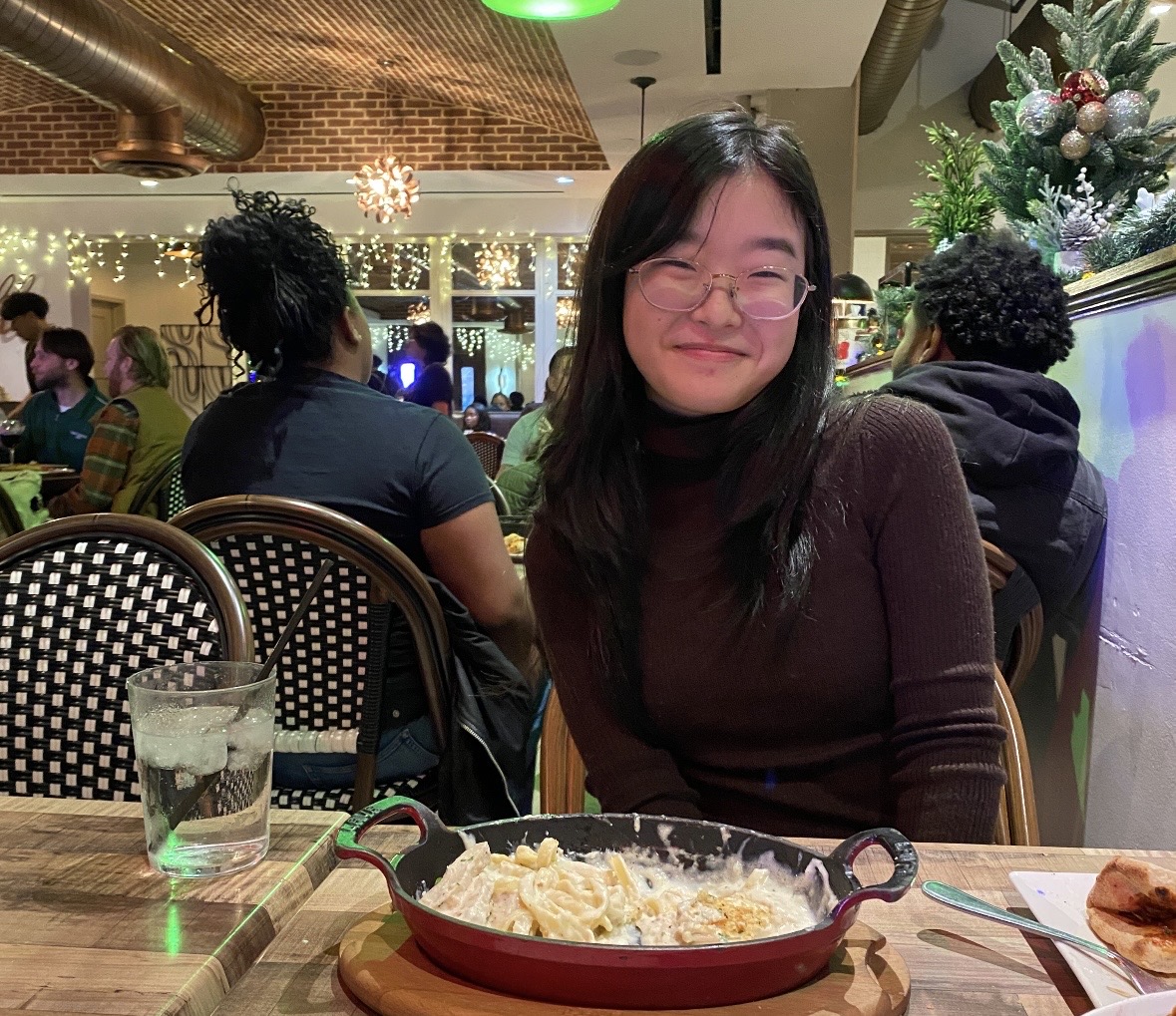
Lee feels a lot less stressed now that her application has been submitted and decisions are out. “It was stressful. I still remember revising the same story again and again. Once I finally submitted it, I felt really free,” she said. Lee will be attending RM as a freshman in the IB program next school year.
However, most of Lee’s peers were not admitted. Mr. Jelen stresses that rejection does not define a student’s future. “Where one door closes, another may open,” Mr. Jelen said.