

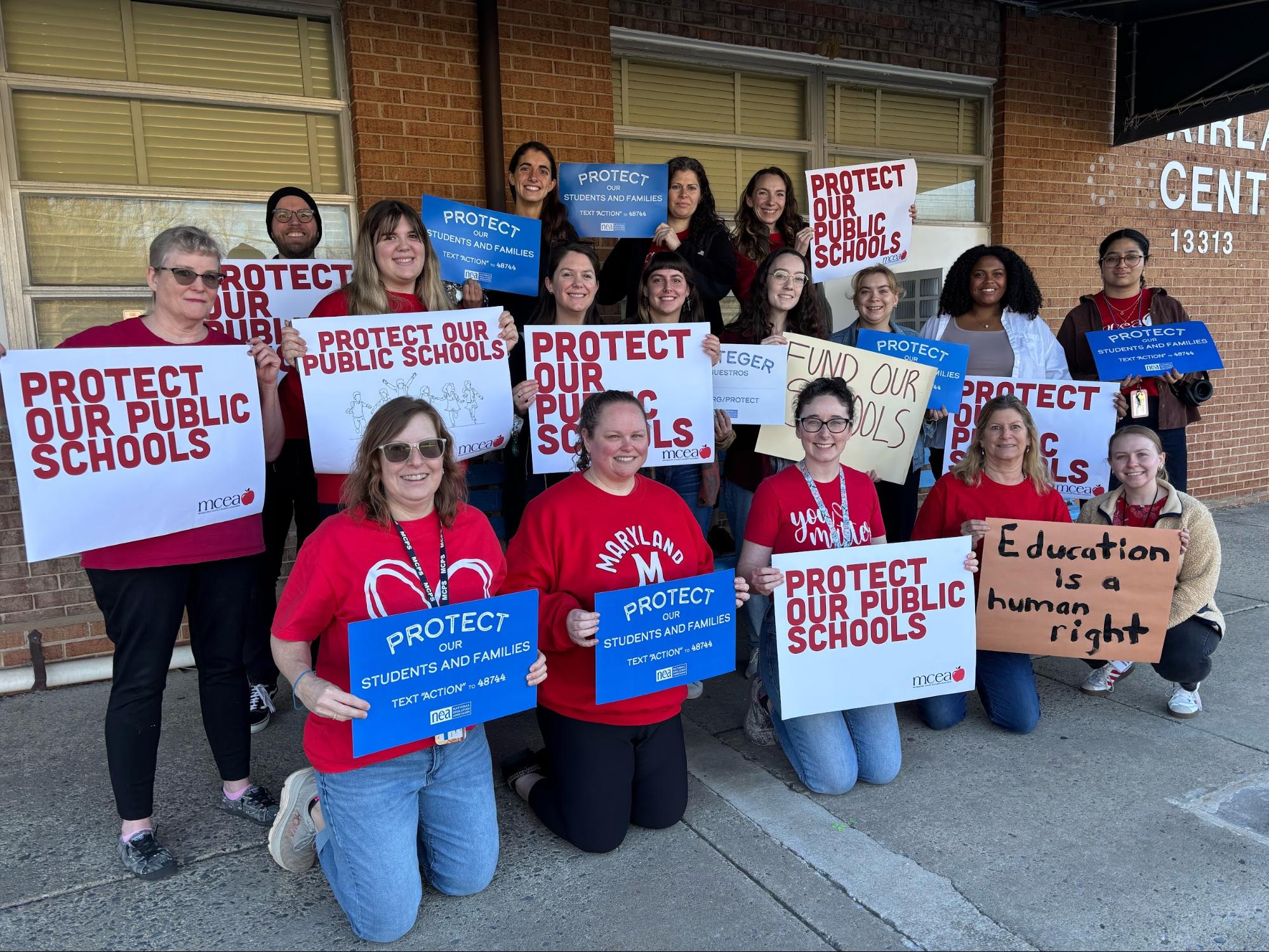
In 1937’s landmark NLRB v. Jones & Laughlin Steel Corp—a case that upheld the constitutionality of the National Labor Relations Act—Chief Justice Charles Hughes penned that public employees “have as clear a right to organize and select their representatives for lawful purposes as [employers] have to organize [their] businesses and select [their] own officers and agents.” Three unions influence the polity at MCPS: The Montgomery County Education Association (MCEA), the Maryland State Education Association (MSEA) and the National Education Association (NEA). The MSEA is the state affiliate of the NEA while MCEA is one of the largest local chapters of NEA, with an electorate of over 14,000 educators.
Nationwide, unions, like the NEA, have, through lobbying campaigns and advocacy, successfully fought for a whole host of workplace and societal labor improvements. In 1938, unions helped pass the Fair Labor Standards Act, which created the minimum wage federally, mandated labor record keeping, capped a working week at 40 hours per week, created overtime pay and banned child labor nationally.
Congruently, unions also secured the 1935 National Labor Relations Act. The NLRA restricted employers from coercing employees, prohibited unfair labor practices, shielded collective bargaining for all employees and established the National Labor Relations Board to hear claims of unfair labor practices.
In addition, unions were responsible for the establishment of weekends, vacation days, unpaid leave (Family and Medical Leave Act), paid sick leave, employer provided health insurance, pensions and workplace safety standards (OSHA).
But even as over a century of union advocacy has culminated in legislative and societal change, the power of unions has receded in recent years. “Following the 1950s, the United States government has had an anti-union policy, right after the Taft-Hartley [Act] passed. Since then, the United States has become incredibly anti-union,” social studies teacher and union building representative Nathaniel Mason said. “I don’t think we can depend on the federal government to protect us anymore. We have to fight for ourselves locally and use our power of labor. We cannot assume that the government is going to back us up anymore.”
Congress’ 1947 Taft-Hartley Act imposed heavy restrictions on unions and dramatically reshaped union power. Section 206 of the act delegates to the President the power to freeze strikes he deems either “imperil[s] the national health or safety” or “affect[s] an entire industry or a substantial part.”
Just seven years ago, in June of 2018, the Supreme Court decided Janus v. AFSCME. Janus held that public sector unions (such as education) could no longer take mandatory “agency fees” from employees. Yet all employees—even those who didn’t pay the union fee—would be able to receive the benefits of the union. “This has made it really hard for unions, because it’s particularly difficult to explain the incentive for paying if you’re going to get the benefits anyway,” English teacher and union building representative Marcy Fine said.
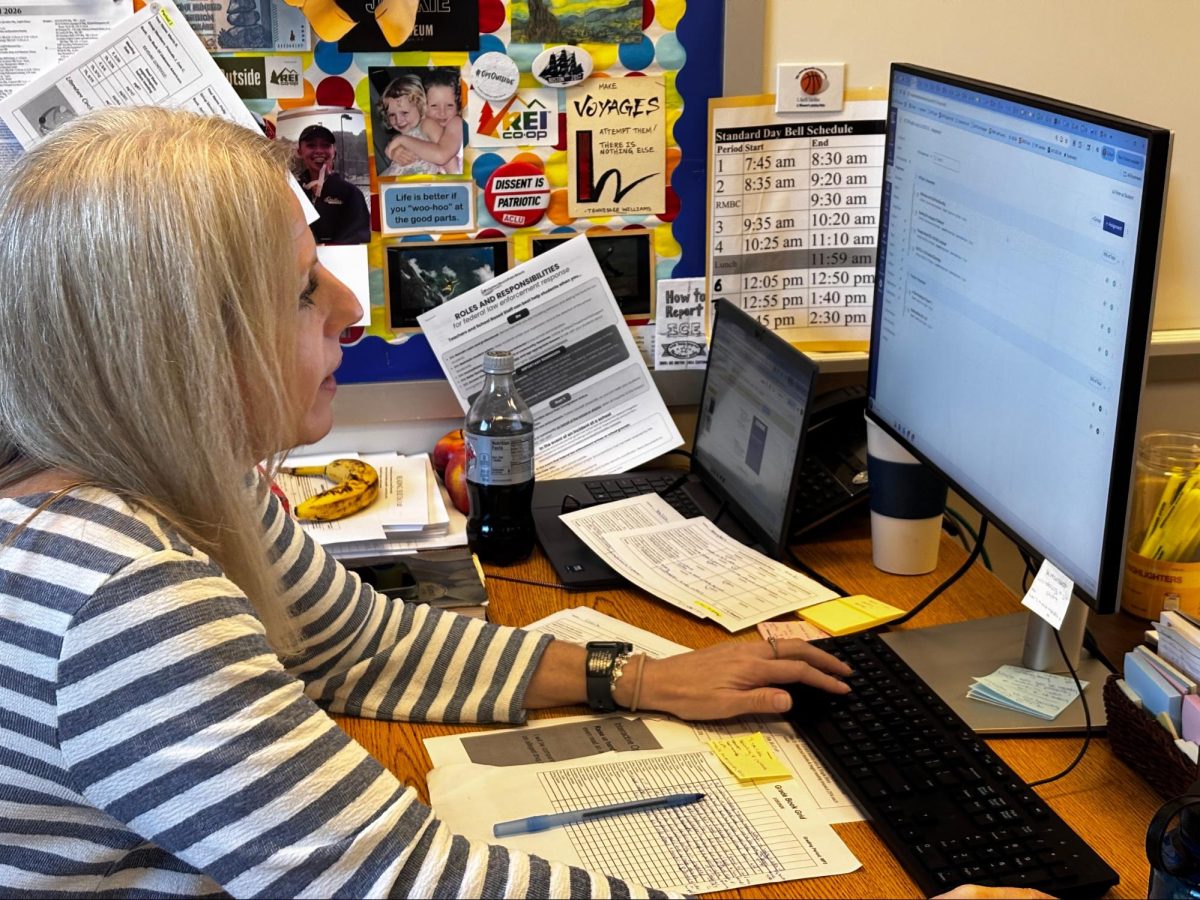
Since the 1950s, union membership has gone down to a historic low. The Bureau of Labor Statistics reports that only 9.9% of all employees are unionized today.
Curiously, the highest percentage of unionized workers is in education and related fields, where over 32.3% of employees are part of a union. Mr. Mason offered an idea as to why: Unions “give you a way to be organized. Being a part of a union ensures that you just straight up get paid more money and that you know someone has your back if [your] school or [your] county is doing suspicious stuff,” Mr. Mason said. “Unionized workers and teachers in the United States make a lot more money; they report higher satisfaction: it’s concrete and real.”
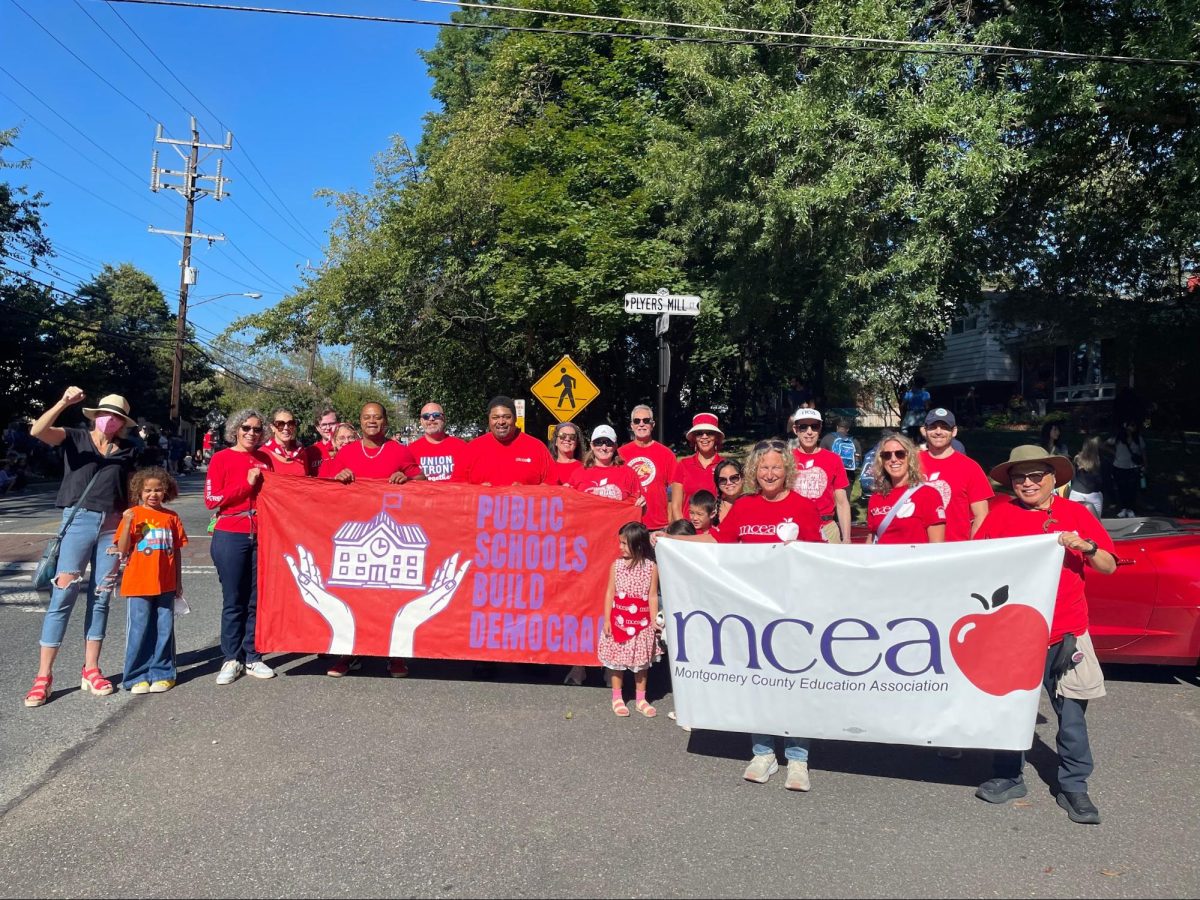
Like most unions, the role of the MCEA is to provide service and protection to its members. In the event of an unjust termination, unbalanced workload, or other scenario in which a teacher needs to be supported and protected from administration, MCEA steps in. That being said, MCEA’s job extends well beyond protecting teachers. “[We also] work a lot with the superintendent and his team on issues that we’re having in the school district. I, of course, work closely with the members and member leaders through our own processes within the organization,” MCEA president David Stein said.
The to-do list of MCEA is long, including negotiating teacher workload, ensuring standards for staffing special education and solving infrastructure issues within school buildings, inter alia. The budgeting process is a particularly pressing issue for the union. “Our top priority is always to fully fund the school budget,” Stein said. “The schools have been consistently underfunded, particularly since the recession in 2009, and we have not gotten our school funding back to that level since.”
Budget allocation and distributing necessary resources is a source of concern for RM’s special education department. It has long been the case. This is due to the fact that in the department, teachers aren’t the only source of support. “I have a paraeducator in both of my self-contained classes, and then I am the second teacher for another [class],” English and special education teacher Ms. Cular said. “There are a few classes that might have a co-teacher and a paraeducator, and that might be because the needs of the class differ; if there is a student from the social-emotional department that has more intense needs, [we] might [need] an additional paraeducator.”
Though all departments in RM need allocations of resources to function, special education is a department within the school system that notably relies on the advocacy and help of the union. In this arena, the union’s presence is at its pinnacle: “A few years back when we unfortunately had a staff member from our department pass away, we took on her workload, and the union came in to help us try to advocate for financial compensation for more time,” Cular said. “Our union is a helpful tool. They are a good bridge between what goes on in the classroom and what goes on in the county.”
MCEA has an excellent reputation for achieving its clearly cut goals. “It was the second Monday that we didn’t have school because of the snow. MCPS initially marked it as a non-instructional day for students, but staff needed to report. Veteran teachers can telework, but first-year teachers, however, had to come in because they’re new,” Ms. Fine said. “But on a day where it’s dangerous to get to school, the union stepped in and said, ‘No, you can’t do that. You can’t require some staff to go through the ice and not all staff. It’s not fair.’ So [MCPS] ended up making that a snow day for everyone.”
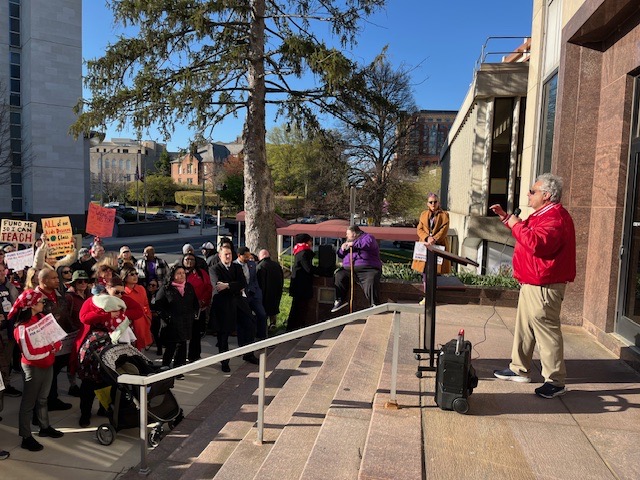
Though it may come across that the MCEA is constantly pushing back against the actions of the school district and the Board of Education, they do maintain good working relationships—notably better than in the past, according to Stein. He says that for many years, the relationship between the union and the central office was defined more by squabble and dissension than by problem-solving. “We went through a ten-year period where [the working relationship] was really, really terrible. There was no collaboration going on; the school district wasn’t being honest; they weren’t sharing real data,” Stein said. “I think that when MCPS hired a new superintendent, [Thomas Taylor], they hired someone who was actually committed to real collaboration. We have seen marked improvement in the last two years in collaboration efforts between us and the school district.”
As a result, there have been more regular meetings, more transparency around issues like staffing and budgeting and a better attempt to listen to educators’ concerns before decisions are made. Instead of only hearing from the union during crises, such as contract negotiations or disputes over working conditions, the district now has enacted new, more consistent channels to get feedback from teachers and paraeducators.
Internally, at each school, union representatives like Ms. Fine and Mr. Mason also provide channels of communication and support for teachers. “Usually a union rep will come around at some point and say, ‘Do you have any questions?’ maybe once a year,” math teacher Laura Goetz said.
Cooperation is a key part of the union’s role in the community. “I believe that being part of the union is very important,” ASL teacher and union building representative Amy Crumrine said. “The administration doesn’t really know what we’re thinking, though I find that most of the time they want to—they do really want to work with us, but some people for a variety of reasons, don’t share their genuine concerns or just be authentically themselves. What we really need to come together and work together: that is something unions help us achieve.”
For many students, unions are invisible; it isn’t something students think about—they may not even know it exists. Yet many things students take for granted, including smaller class sizes, access to specialized support and teachers who have time to plan meaningful lessons, are the result of consistent union advocacy.
“Right now, nationally, unions are under attack. There have been a lot of moves, especially in the federal workforce, to undercut unions in the past year,” Ms. Fine said. In the past year, there have been a barrage of actions from the Trump administration undercutting unions and labor agreements in the federal government. In March of last year, President Trump signed EO 14251, entitled ‘Exclusions From Federal Labor-Management Relations Programs,’ which terminated federal workers’ ability to collectively bargain in national security and intelligence jobs, propounding that “collective bargaining is incompatible” with “an efficient workforce.” On Aug. 28, President Trump expanded the order to multiple more agencies across the federal government with EO 14343. Further, President Trump’s removal of Kathy Wilcox last year from the National Labor Relations Board froze the labor protection board until the Senate confirmed a replacement 11 months later, restoring the quorum necessary for the agency to function.
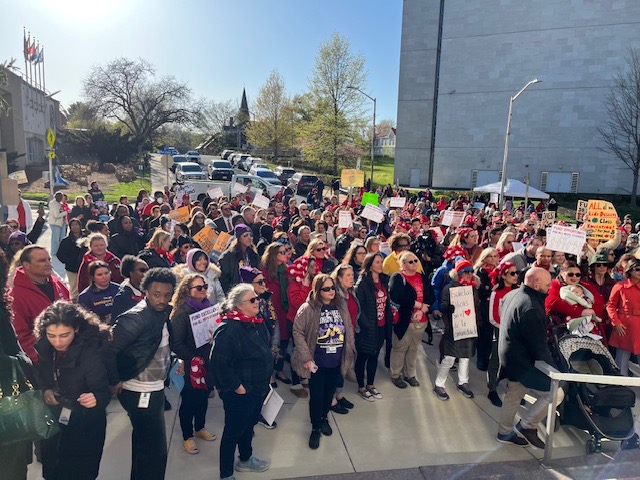
“We have unions to thank for safety in workplaces, for weekends and not 7-day work weeks, for our kids not working in factories and for people not having to work 24 hour shifts straight. This is what unions do. Unions make sure it’s safe for workers and the public,” Ms. Fine said. “When other unions have been under fire, MCEA, and other teachers unions, have aided them and offered their support. This is crucial because we’re all doing the same work in our respective industries; that is, protecting workers rights.”
If you would like to voice your opinion on an issue you feel is relevant to our community, please do so here. Anyone is able and welcome to submit a Letter to the Editor, regardless of journalistic experience or writing skills. Submissions may be published either online or in a print issue.