During every student’s time at RM, they will inevitably pass through the same hallway on their way to one of their history classes. Yet few know that the corridor they rush through each day has an official name: The Hines History Hallway.
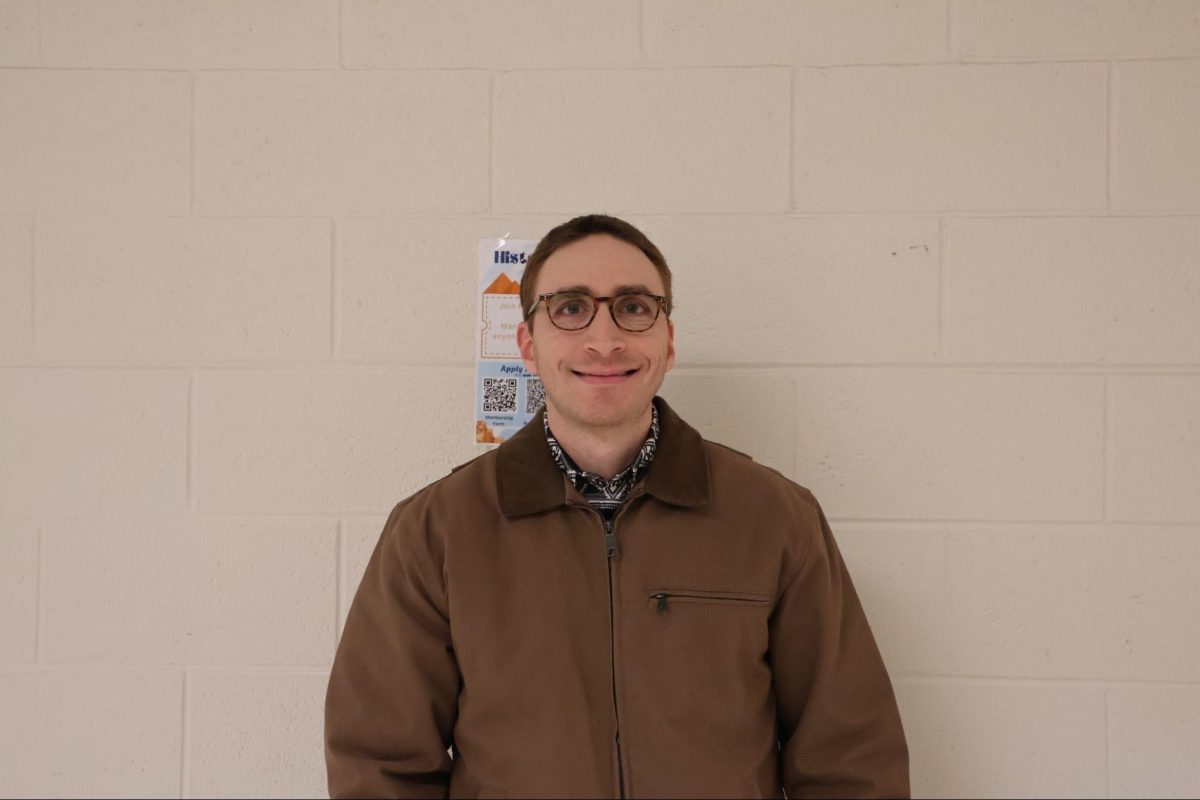
Robert Hines, a former social studies teacher at the school, grew up in Montgomery County, one of the few residents whose family had lived on ancestral farmland there. That rural upbringing strongly shaped his later life. “I always enjoyed hearing him talk about history and about chickens,” IB Global Politics teacher Noah Grosfield-Katz (G.K.) said. “He told me a lot about how to raise chickens, which I now do—so I’m indebted to him for quite a bit of knowledge.”
Growing up on a farm was how Mr. Hines first discovered his passion for archeology. “I noticed a rectangular burnt space under some sod on my farm one particular day. So I took my shovel and started digging into this black soil before I started to find wagon parts and horseshoes among other things,” Mr. Hines said. From then on, he kept digging. According to Mr. Hines, he was interested in any and every opportunity to explore. “I joined excavations in Alexandria, Virginia where we dug a historical liberated Black home one summer. I also helped out in digs down at St. Mary’s College, and so I always kept myself involved in archeology,” Mr. Hines said. But sooner or later, in 1969, Mr. Hines came about a greater adventure: Teaching.
“He was teaching before I was even born,” AP US History teacher Lisa MacFarlane said. After impressing the then history department chairmen with his proficiency in the subject, Mr. Hines would be recruited to RM in spring of ‘87. “Essentially I was told they were going to take me out of Magruder High School, my first teaching job, and I would be given one semester, the spring semester, to set up the IB history program,” Mr. Hines said.
With this responsibility, Mr. Hines was also tasked with creating the rest of the history curriculum. Mr. Hines’ role in determining coursework expanded past the IB program, which only begins in students’ junior year. “They told me, ‘You have to create the vision of where you want them to be as juniors, what history background they need to succeed in the IB program.’ So I essentially had carte blanche—I had freedom to do what I wanted to do. I didn’t have to go to the county and get approval. So I created a 9-12 curriculum,” Mr. Hines said. At almost each grade level, Mr. Hines reconstituted a new syllabus. Mr. Hines brought to the 9th grade curriculum a completely new foundation: Centering on analysis of the timeline from early legal texts like Hammurabi’s code, Magna Carta, the Ten Commandments and Corpus Juris Civilis (Justinian’s code) to modern legal precedents including various Supreme Court opinions. Although not all of these texts are used in the current curriculum, Supreme Court cases are still part of the coursework. Mr. Hines also expanded AP US History from an originally upperclassman-only class into one open to sophomores. In his IB History European Studies class, Mr. Hines augmented the curriculum with a surplus of hands-on assignments while also orienting the course for a greater dissection of documents.
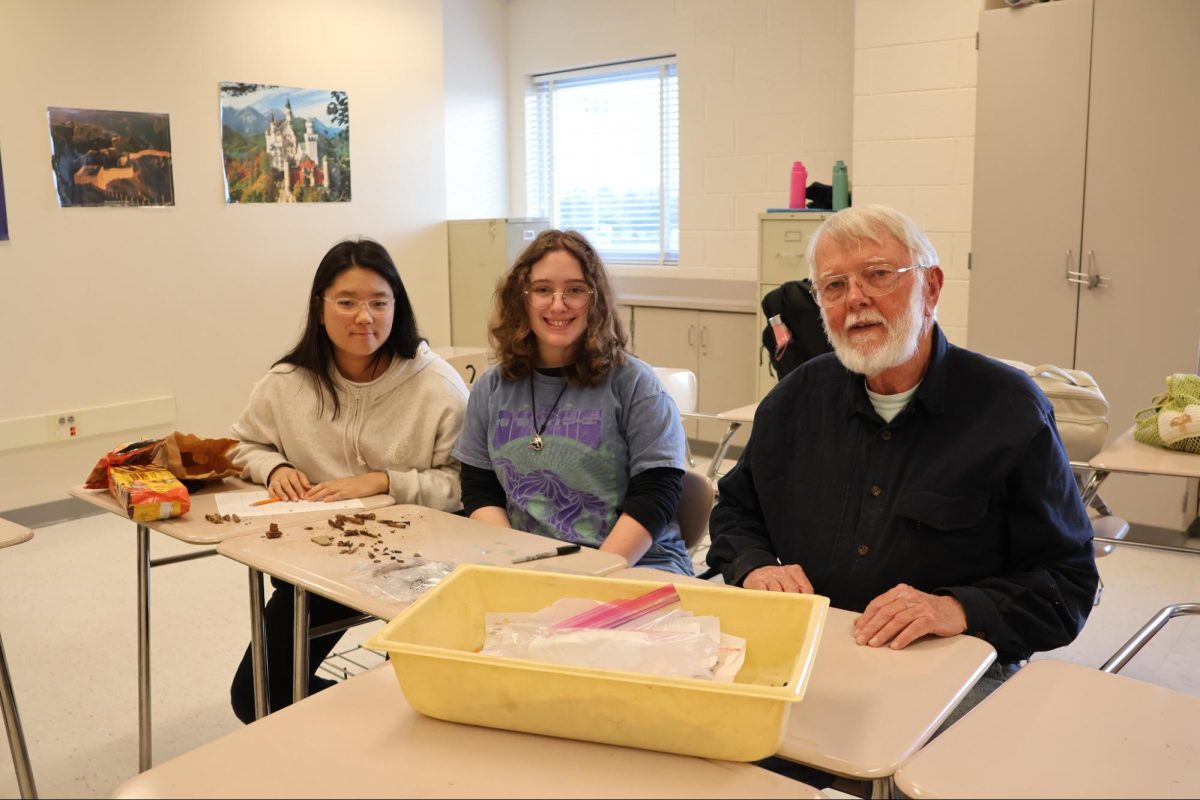
Coinciding with his 1987 arrival at Richard Montgomery, Mr. Hines introduced to the school the Archeology Club, now the oldest established club in RM. The club still gathers every Thursday in room number 218 for an hour-long meet after school. Under careful supervision and the mentorship of Mr. Hines, club members clean, sort, catalogue and record artifacts. “The club is definitely very important in the process of documenting the history of places in and around Montgomery County,” sophomore member Justin Ladicola said. Summer breaks at the Archeology Club are traditionally well spent at various different dig sites around the Montgomery County area, such as the 18th Century Wade Magruder house and the Riggs House in Brookeville.
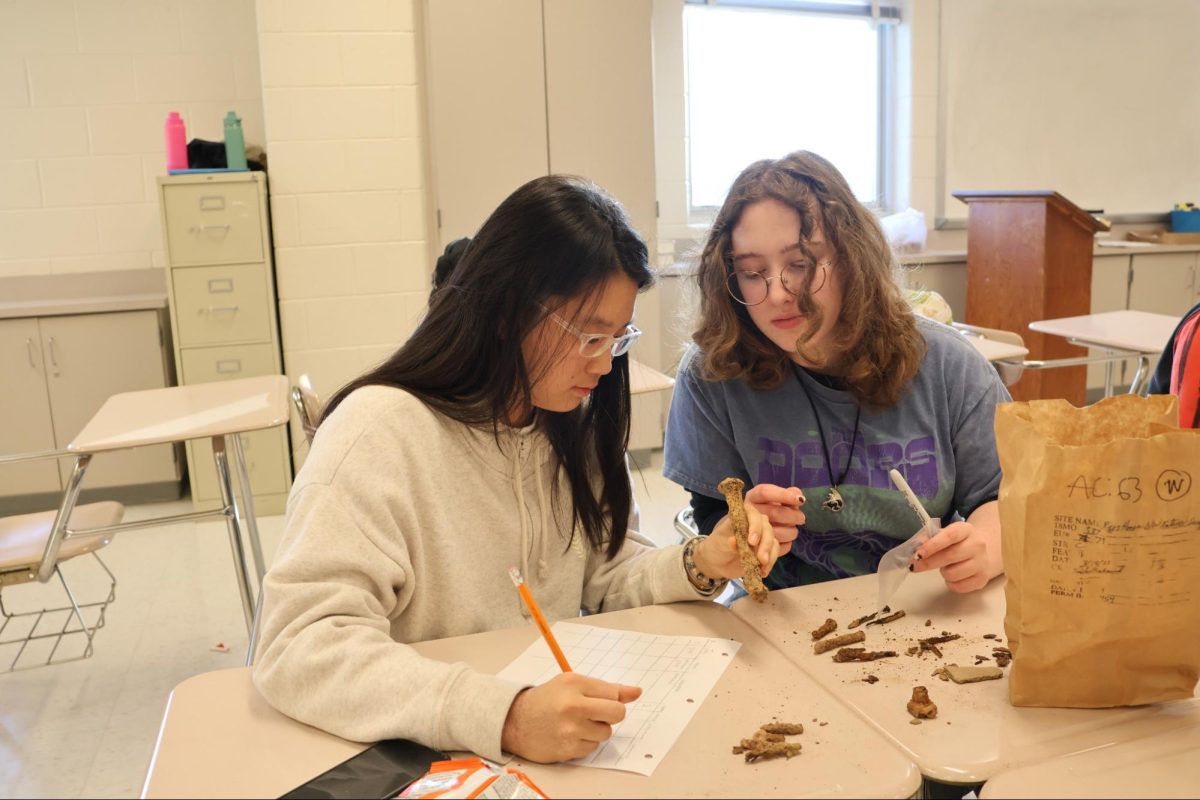
“The overall allure of archeology is so entrancing to me, and should be entrancing to anybody, really,” senior and club leader Izel Carmona said. The club, open to anyone with an appeal to learn and an hour to spare, is also the unrivaled place to hang out with friends. “Honestly, I just joined it on a whim because it sounded kind of interesting. But I stayed because of the people there—it’s a really tight-knit, close community,” sophomore member Delia Carlson said. “In one way or another, we all value history, and I think that it’s really cool that we can have this little space after school to share that together.”
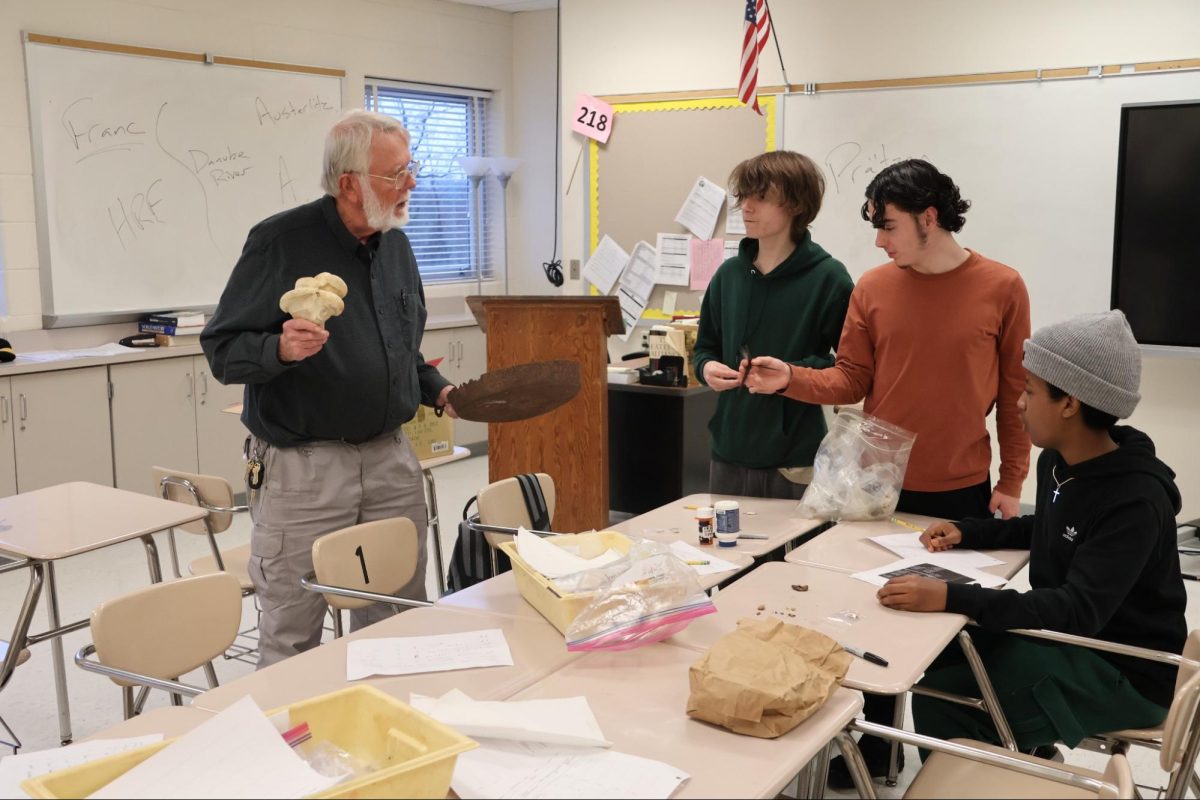
Amongst the diverse membership of Archaeology Club, students can be seen participating in all sorts of activities—ranging from cataloging artifacts, to eating snacks and talking with Mr. Hines. “If you start a conversation with Mr. Hines, it will never end. You learn so many interesting things just by talking with him,” sophomore and club member Kate Cho said. In his own interview, Mr. Hines discussed some of his most important achievements throughout his expansive career.
In one such instance, Mr. Hines described his role in influencing the layout of many of the social studies classrooms during the 2007 building renovation. “When we were in the old building, we were in the smallest classroom,” Mr. Hines said. “So when we got to the new building, I wanted to offer my staff bigger rooms. I designed these classrooms. I literally made them bigger.” Because of Mr. Hines’ input, students today enjoy more spacious classrooms.
In another instance, Mr. Hines reflected on his role in shaping the makeup of the Social Studies Department. “For a while, I was in the IB history department. I hired the teachers, probably close to over half. So I sort of left my imprint on the hiring process and the department in general. Later on, I was made department chairman,” Mr. Hines said.
Even following his retirement from teaching at Richard Montgomery, many in the Social Studies Department still cherish their relationships with Mr. Hines. Several of his colleagues also praised his kindness in the roughly 17 years of the department under his leadership.
“He was always very helpful. He was also very forgiving when I made a mistake early in my career. He is a great person and a born teacher—talking to him, you’re going to learn something,” Mr. G.K. said.
“He was such a valuable resource when it came to history and this department. But he also believed that you were a person first, and that that came before your job. I really appreciated the two things together,” Ms. MacFarlane said.
“He had a passion for the content that he taught and was constantly researching new details and refining his presentations accordingly. His work ethic provided a template for those of us he had hired to work for him and set a standard of professionalism for our department that resonates to this day,” AP Government teacher William Vicari said.
When asked to describe Mr. Hines’ legacy, Mr. Vicari put it best in a single phrase. “The consummate professional, an absolute expert at his craft, and a legend in the history of MCPS,” Mr. Vicari said.
Mr. Hines retired in 2018 after 31 years at RM and an almost 50-year career in teaching MCPS students.
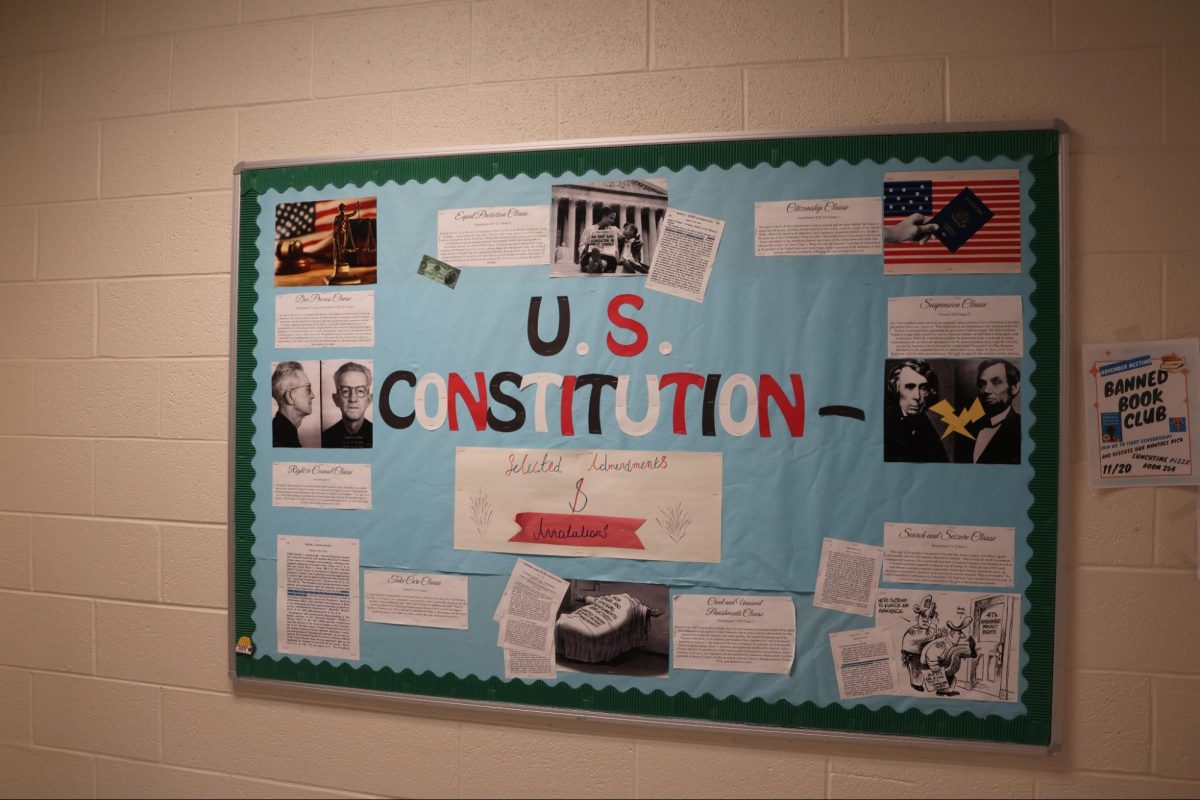
Today, students pass through the Hines Hallway without realizing the clout behind the name. Yet the teachers he mentored and the influence he brought through Archeology Club continue to shape the way students are taught to discover history for themselves. “I just think it’s perfect. If you’re gonna name a hallway after someone, they picked the perfect person for the position due to his knowledge and willingness to help the other teachers teach history,” Ms. MacFarlane said.
If you would like to voice your opinion on an issue you feel is relevant to our community, please do so here. Anyone is able and welcome to submit a Letter to the Editor, regardless of journalistic experience or writing skills. Submissions may be published either online or in a print issue.