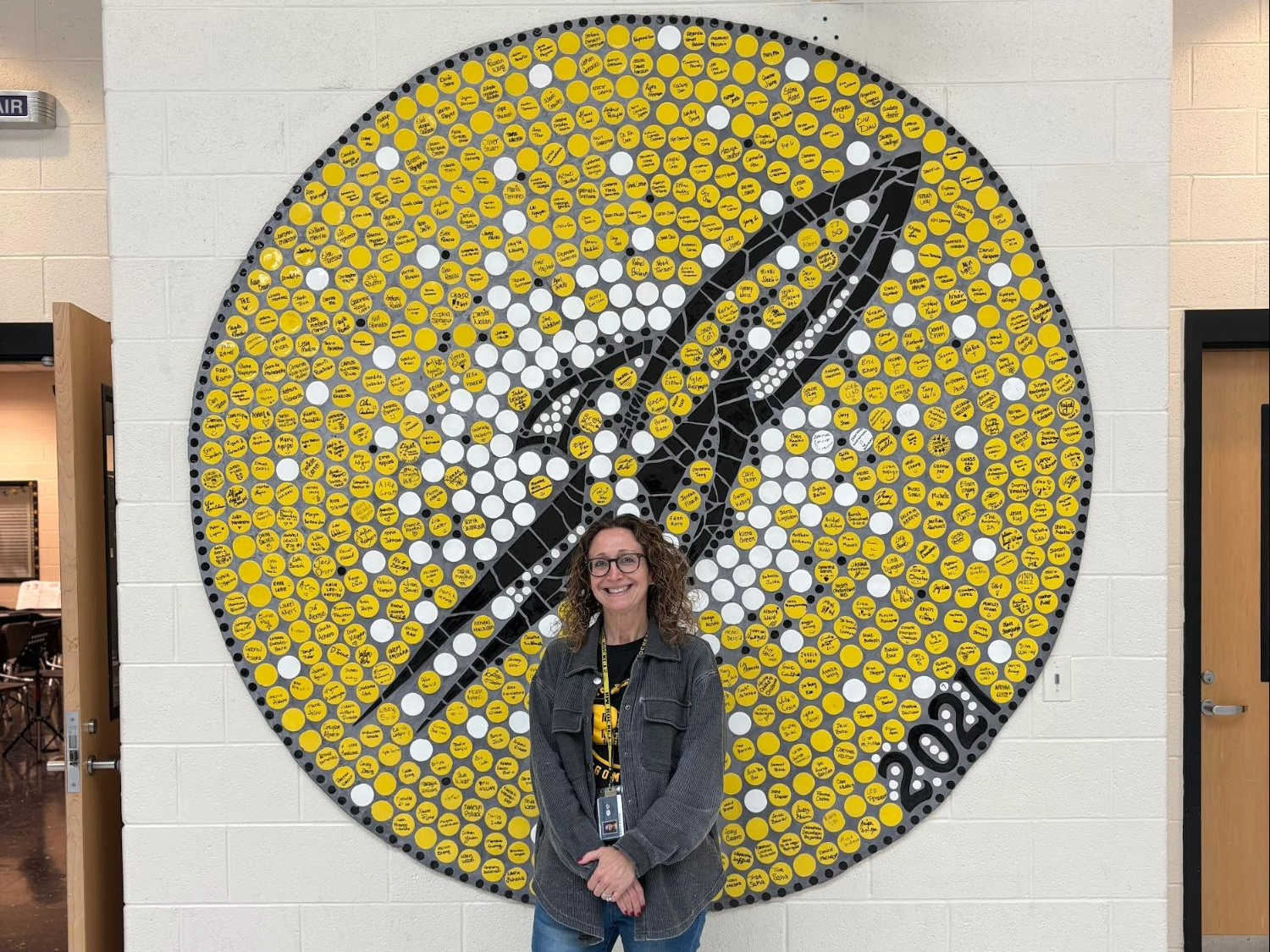
Many unsung heroes work behind the scenes of RM. Building services, security and many other professionals work tirelessly to help keep the school running and keep everyone happy. Sheryl Stevens, the RM speech pathologist, works tirelessly to help countless students communicate, participate and learn.
Ms. Stevens has worked as a speech pathologist for almost 21 years, and has been at RM for 11 of those years. Over the course of her lengthy career, she has helped hundreds of students navigate their difficulties in speaking and communication. Her office is located in room 125, just along Main Street.
Many of the students and teachers aren’t aware of what a speech pathologist does or the fact that RM has one. Speech pathologists work with students and people who require speech therapy. This means that they suffer from a verbal disorder or disease and require professional therapy to overcome it.
Ms. Stevens’ career began at the University of Wisconsin-Madison. “Partly because they have an incredible speech pathology program,” she said. To get admitted to the program, she completed prerequisite classes and took a special exam. “It was very competitive,” she said. The cohort was only about 30 students.
After getting her undergraduate degree, Ms. Stevens went to graduate school in New York to get her master’s degree. She took summer classes and completed internship programs, and managed to complete her degree in two years.
After graduating, there was one last thing that Ms. Stevens had to do before getting her license to operate as a Speech Pathologist. She had to go through a year of supervised practice, called a clinical fellowship year. “And then, once you’ve completed that year, you receive your Certificate of Clinical Confidence,” she said. This certificate allowed Ms. Stevens to practice independently.
After getting her license in 2006, she got a job at Albert Einstein Hospital in the Bronx, where she worked for eight years. For two of those years, she also worked part-time at a private practice in New York City. “And then, I met my husband and moved down here,” she said. “That’s when I switched to working in the schools.” This eventually led her to Rockville to work at RM.
Many of the students that Ms. Stevens works with have IEPs. An IEP is an individualized education plan for students who require special education accommodations.
Daily, Ms. Stevens does a lot. Every day, she has a list of students she has to assist with speech and language. “I’ll go into the English classroom, because that is a very heavily language-based environment,” she said. She also might pull students out of class to work with them in one-on-one sessions or group sessions with other students. “My daily goal is to be able to see all of my students who I have scheduled and to make sure that I really can help them with their goals and objectives.”
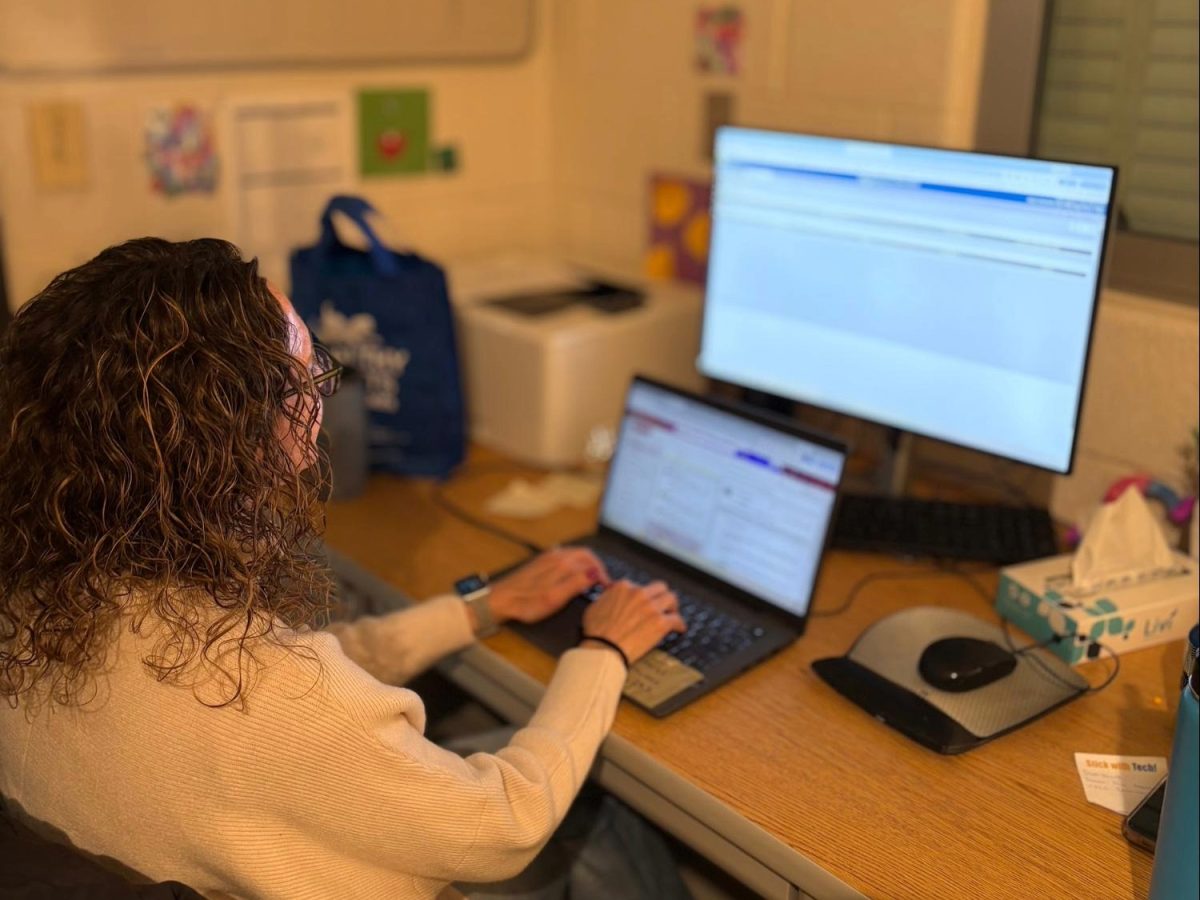
Like many people when choosing a career, Ms. Stevens had inspirations. “I love helping kids. I wanted to actually be a pediatrician, but I can’t handle the blood,” she said. “I always wanted to work in a field where I could be in the health field or in a school.”
On top of this, Ms. Stevens had someone close to her who had a serious condition that affects the neurons in the body. His condition had caused him to be nonverbal. “I could sense his frustration in not being able to express his wants and needs,” she said. “Before I even knew about the field, I would spend time with him and try to figure out how I could help him, and that really got me interested in the field.”
There are many practices that pathologists use to assist people with speech and communication disorders. “Every goal is different,” she said. She says that this way, students with different needs will receive different therapies. For example, kids who have difficulties with the comprehensive aspect of speech, she uses a simplification technique to help students gain confidence in their speech. “We work on talking about the topic and organizing the thoughts so that they can better organize their written language.”
Ms. Stevens also said that sometimes people mistake her job for another one. “They think I’m just a substitute or just a helper in the room,” she said. “I think it might be difficult for students to understand such a broad field.” However, she says that she has done events for people wanting to learn more about her job. About a year ago, she worked with the career center to give a presentation on what speech pathology is. She says that for students who are interested, she would be happy to do that again.
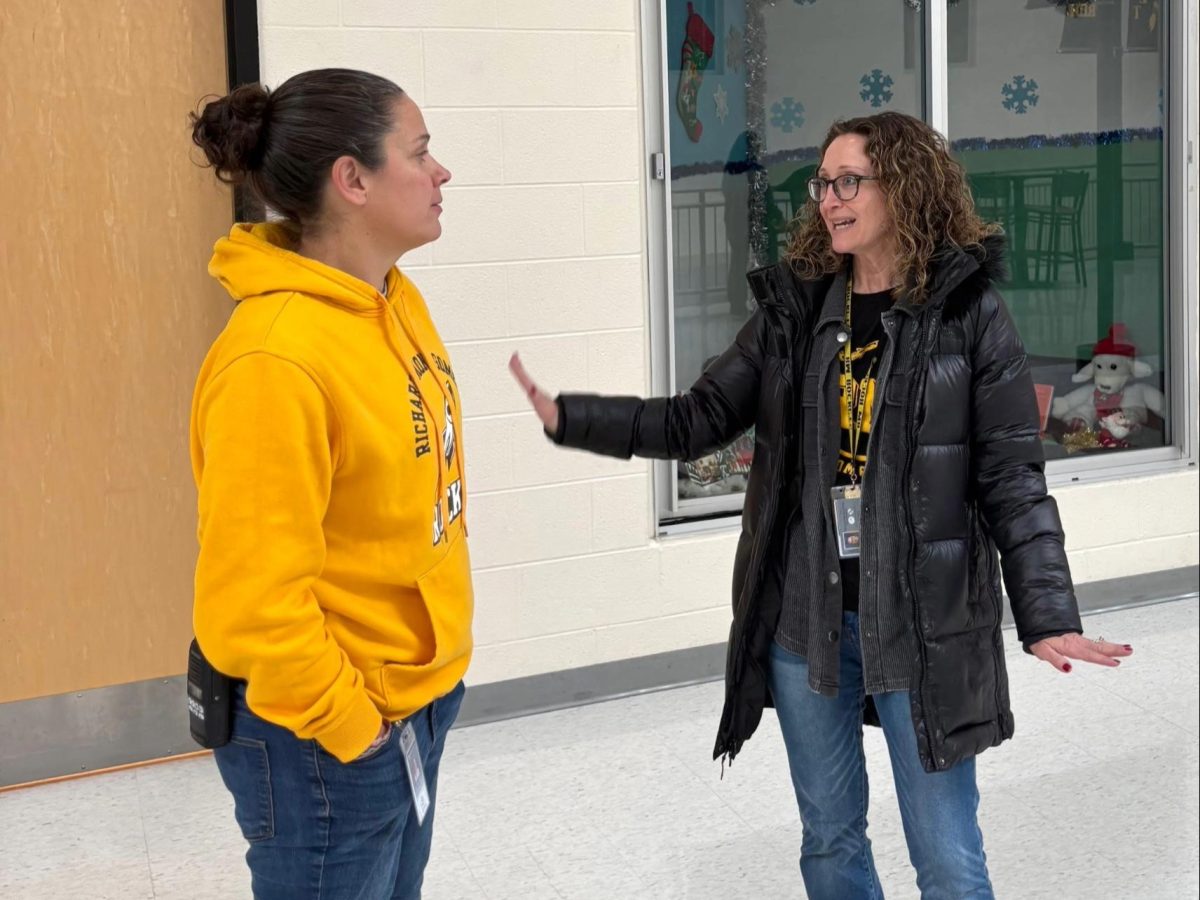
Ms. Stevens works with other teachers to help students as well. “I’ll talk to the general education teacher to talk about strategies that would be helpful for their students,” she said. This helps many teachers shape how they approach lessons, especially for students who need the support.
(Yuvraj Chothwani)
One of the teachers Ms. Stevens works closely with is English teacher Michael Oakes. He has worked with Ms. Stevens for as long as he has been a teacher at RM. Similar to other English teachers that Ms. Stevens works with, she’ll go into classes and work with the students who have speech disorders. “Ms. Stevens is there to lend her expertise,” he said. “She’s very helpful in our English classes, working with individual students, being able to identify some issues that they may have relating to speech.”
Another one of the English teachers Ms. Stevens works with is Katherine Fliakas. She has worked with Ms. Stevens for eight years. “She’ll either meet with students individually or pull a small group and talk them through their ideas for the assignment,” she said. “Ms. Stevens is a phenomenal resource. She’s built really amazing relationships with kids. They trust her, and the progress that she helps students make in terms of hitting their goals is just amazing.”
Not only does Ms. Stevens work with English teachers, but she also works with other paraeducators. One of these special education teachers whom she works with is Jackie Cular. Ms. Cular has been working with her since Ms. Stevens’s first day at RM. “We work together, where she comes into my classroom and helps my students,” she said. “I work with students who often have IEPs, and so part of what they might need is helping them understand language better. Not just the words that we speak, but there’s a disconnect. And so, Ms. Stevens helps my students with that disconnect.”
Many of her students will never fully recover from their impairments and will need to work with professionals such as Ms. Stevens for their whole lives. However, in rare cases, Ms. Stevens is sometimes able to help students completely overcome their disabilities. “The biggest part in being successful is that the student also has to be motivated and to do better,” she said. “I had a student who was this way. We worked through all their goals, and they were dismissed… when I’m able to dismiss a student from speech services, it’s the best feeling in the world.”
Over the years in the field, Ms. Stevens says she has helped hundreds of students. “There’s definitely been some obstacles where I want to help a student and might not have the resources available to help. That’s been difficult,” she said. “[But] I don’t give up. I keep pushing until I can get what I need to help the students.”
If you would like to voice your opinion on an issue you feel is relevant to our community, please do so here. Anyone is able and welcome to submit a Letter to the Editor, regardless of journalistic experience or writing skills. Submissions may be published either online or in a print issue.