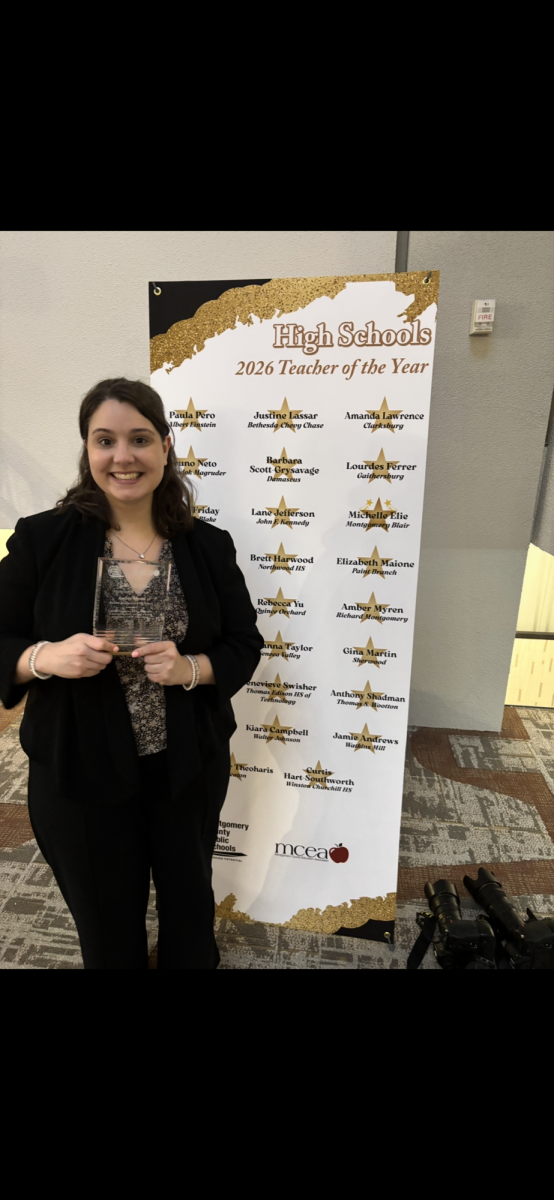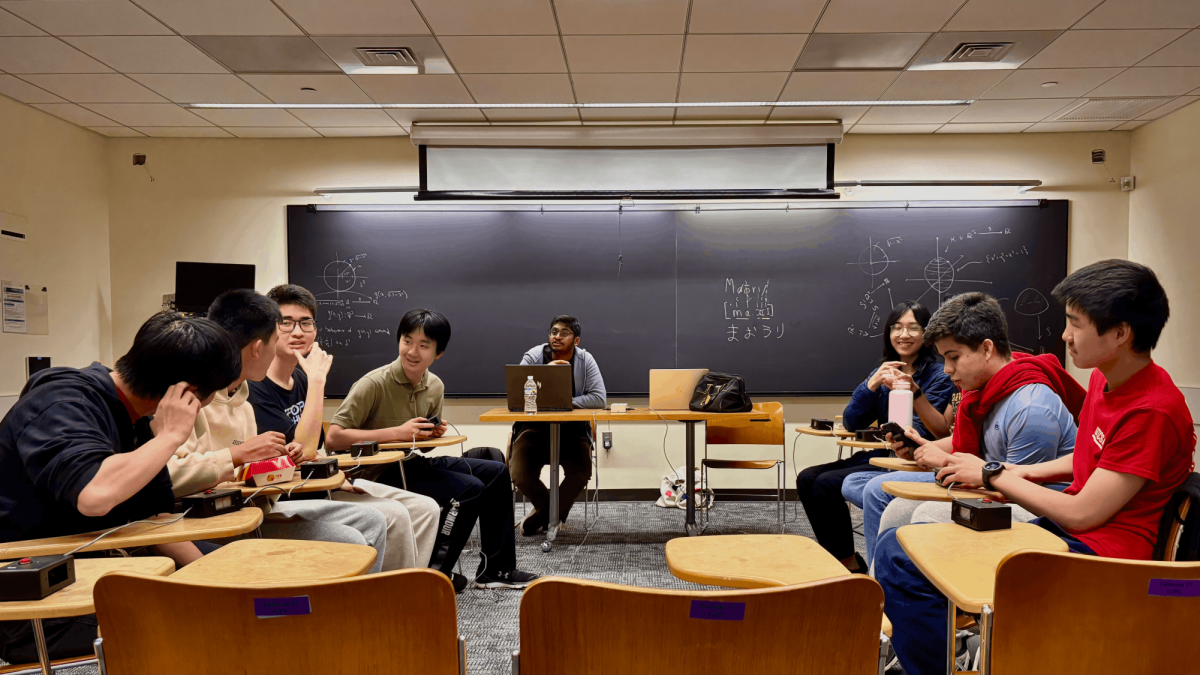
Sustainability always starts at a community level, from turning off the faucet to picking up trash on the road. While Montgomery County is renowned in many fields, its environmental progress and leadership stand out. “You go to our recycling place. [Montgomery County has] a place for batteries and used oil and recycled books and textiles,” Goetz said. In addition to teaching, Goetz is a member of a staff-led green committee at Richard Montgomery. This committee facilitates efforts spanning recycling, campus wildlife, reusable materials and more. “There’s a battery collection and it’s mostly for teachers… And last year we collected 100 pounds of batteries,” Mr. Goetz said. The committee has been around for over 15 years and is one of many green-oriented organizations at the school.

Richard Montgomery has always promoted sustainability. From its formative years and into the early 2000s, the school had an official recycling and Student Energy Resource Team (SERT), as well as a horticulture class, until they were discontinued. Moreover, RM is completely electric and contains solar panels on the roof. A community garden started by members of the RM Climate Club decorates its exterior, with produce donated to Manna Food Center. “So the first year they donated one hundred pounds of fresh produce… We have Manna come and bring fresh fruit for our families in need and then we donate to them. So it’s a whole circle kind of thing,” Laura Hermansdorfer, administrative secretary and green committee member, said.
The green committee also led an endangered species fundraiser. “It was on Main Street for a week, where people donated money and you adopt an animal through the National Wildlife Federation,” Mr. Goetz said.
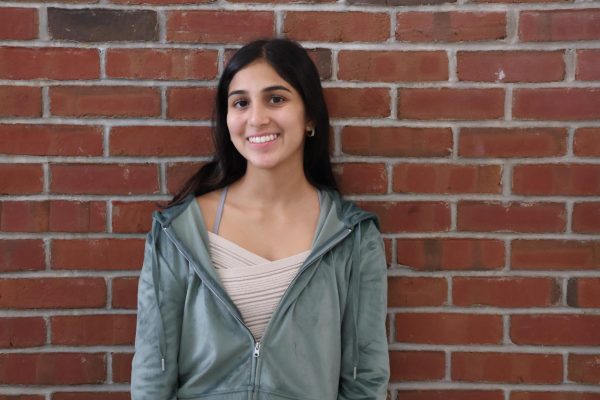
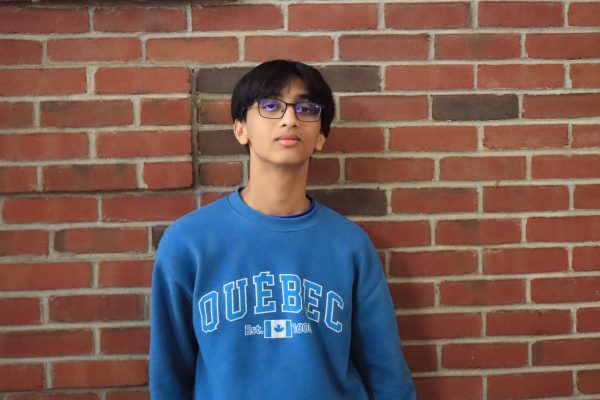
The RM Climate Club, led by seniors Josie Kim and Aditi Kikeri, works to reduce the environmental footprint across Richard Montgomery and MoCo. One of their most impactful projects was the installation of low-flow faucet aerators at RM, which are attachments to the faucet that reduce the amount of water that passes through at once. “We installed over 102 aerators, which we estimate saves over 300,000 gallons of water per year and $2,000 annually,” Kim said. Following the project’s success, Climate Club is trying to expand these installations to more middle and high schools county-wide.
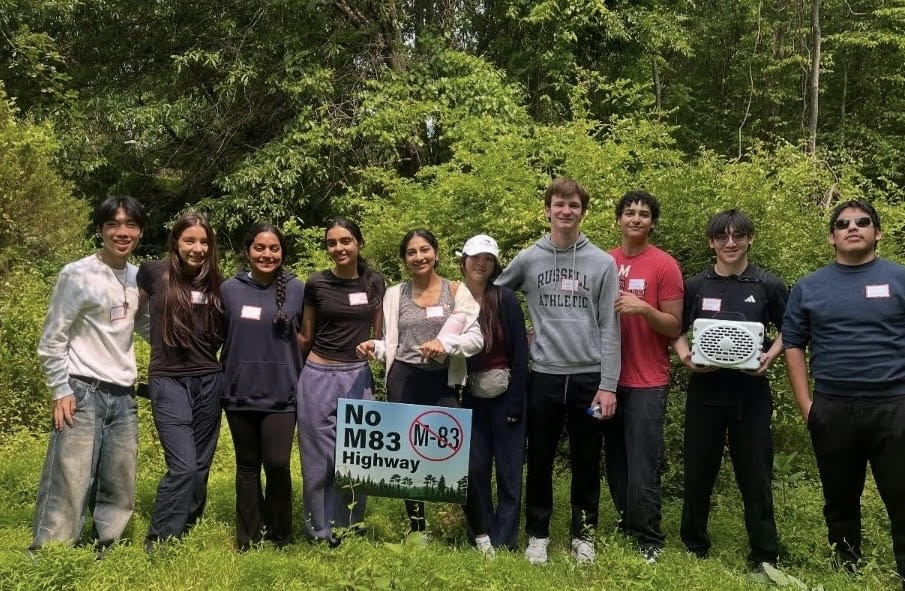
Another notable initiative was the Climate Club’s protest against the construction of a highway. The highway would have been a 1.3 billion dollar project that cut through park land, drinking water sources, and would increase greenhouse gas emissions. They collaborated with green clubs fromRichard Montgomery and the TAME coalition, a local nonprofit. “The plan is called [M83] Zone. We went on a climate hike and then through that we made social media posts and signed petitions…we also partnered with another one of the green clubs,” Kikeri said.
Educated Earthlings, a new club this year, holds bi-weekly meetings that consist of student-led presentations and games. “Educated Earthlings is just meant to educate students on little things that we can do to help create sustainability in our environment,” sponsor and biology teacher Bessy Albaugh said. “Even the smallest things that we can do make a big impact.
Powerdown Club and Compostology are two more clubs with similar themes. Powerdown Club raises awareness on everyday things that help reduce energy footprint. “I know we have the green team and the climate club, and a lot of these really important clubs are doing a lot of good work,” senior, co-founder and co-president Callie Deng said. “But I think because energy conservation is an issue that’s lesser known, there’s not really much being done to help solve this issue.”
Compostology is a county-wide group with a similar goal, founded in 2020 by two RM students, Angelina Xu and Advika Agarwal, earning multiple accolades like the 2022 Maryland Youth Service Award.
Student and staff leaders are also involved in efforts that transcend Richard Montgomery. One example is the Student Climate Action Council, empowering student voices to satisfy awareness efforts and goals. “The Climate Change Action Plan is one of our main projects aimed at targeting carbon neutrality in MCPS,” junior, council member and president of the Climate Club Josie Kim said.
The plan would better hold MCPS accountable for some of their specific environmental targets. “Right now there are pretty clear goals…but there’s not really a plan of how we get there. So that’s where this new plan that we’re drafting could really be helpful,” junior and policy committee member Quinley Borden said. The council meets monthly and has been involved with events such as the Youth Climate Summit.
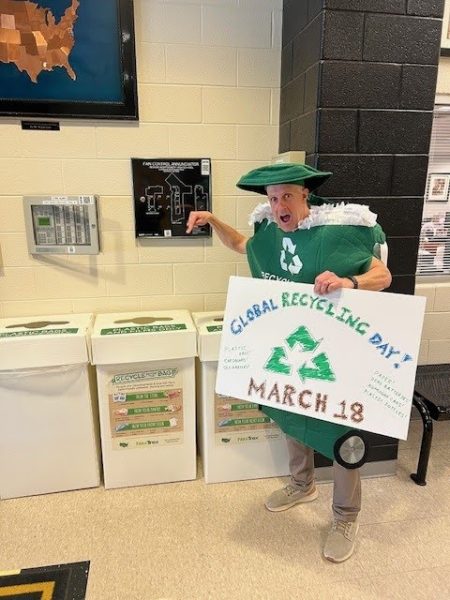
As a whole school, Richard Montgomery participates in the Trex challenge, which collects plastics to be remade into outdoor furniture. “The competition is collecting plastic bags and if you get over 1,000 pounds, you get a Trexbench,” Mr. Goetz said. After just a few years of participating, RM has already won two benches, which are on display outside the school.
Even more impressive is Richard Montgomery’s recognition as a Maryland Green School, a title it has held for the past 15 years. “It requires a certain amount of building efficiency, a certain amount of carbon reduction. What it also requires is student engagement and the environmental learning piece of it,” Borden said.
A common belief held by Richard Montgomery’s climate activists is a concern for the planet. Often, these concerns are shaped through meaningful experiences in their childhoods. “To mark a specific moment, in 8th grade our school had us participate in a C-Span contest and my group and I decided to focus on the Chesapeake Bay and how pollution has changed,” Kikeri said. “I think learning about how even small things can have such a huge effect on the environment…inspired my passion.”
Still, alongside success comes room for improvement. Teachers and students already have ideas for mitigating RM’s contribution to climate change and waste. “We could get better paper towels so that…we don’t have to use 10 packs,” Ms. Albaugh said.
Substantial challenges such as budget also limit the quantity and scale of projects that can be achieved. To help with this problem, RM is utilizing grants, including the Piedmont Scholarship. “You have to write a letter, you have to have a submission of what you’re gonna do…but it’s all green, so it has to be environmental,” Ms. Hermansdorfer said. These grants have provided up to $1,000 to pay for RM projects. There are also different ones that teachers can work with the PTA to acquire.
Another challenge is inefficient infrastructure. RM’s exterior is very outdated compared to other schools, and a significant portion of its carbon footprint is attributed to the building. Borden explains that while renewable energy sources, such as geothermal heating are solutions, the necessary funding to implement them takes time to get from the county.
On the other hand, an easily-resolvable issue is student involvement, which clubs are working to address both in-person and online. This is done through social media outreach, frequent events and engaging awareness material. “A lot of times, the adults are coming up with ideas… The more kids that are involved, the better,” Ms. Hermansdorfer said.
Richard Montgomery’s Class of 2017 is one noteworthy example of student engagement. With collective efforts to reduce plastic waste, this class donated the water bottle refilling stations by the RM Media Center, which are still used. This project was completed before these filling stations became a post-pandemic MCPS standard.
However, it does not take a grand initiative to help the planet amidst a climate crisis. Even smaller efforts go a long way, especially when global warming can have an impact on everyone, whether it’s public health or food contamination.
“[The green committee decorates] light switches to make sure people turn them off, because of course, classroom lights are on all the time and they shouldn’t be,” Mr. Goetz said. He also has many other changes he would like to see implemented, like replacing styrofoam with compostable bags and reusing water bottles. Specifically, many students and staff have been conscious of food waste. “If you have the opportunity to reuse [food items], that’s gonna be a lot better for the environment long term,” Borden said.
Transportation is also a big component of sustainability. Every day, over 1,000 RM students walk, bike or ride the bus to school. Many also carpool. “Montgomery County right now has the largest school bus fleet in the nation. They have over 300 electric ones… We want to make sure that they’re still buying electric buses and not buying more diesel buses,” Borden said.
At home, many teachers incorporate sustainable practices into their daily lives. Ms. Hermansdorfer grows native plants, kills grass naturally and makes her own weed killer. She also limits her energy use. “I don’t use the fluorescent lights. I use low lights, so they’re less energy waste. I shut down my computer every night. I keep my thermostat pretty high at home, so I don’t run the air and the heat,” she said. Mr. Goetz has a compost in his backyard and packs his lunch in reusable Tupperware.
In environmental advocacy, even one small change can make a difference. “If you can convince even one other person to make a change that helps the environment, then I think you’ve fulfilled your purpose as an advocate,” Kikeri said.
If you would like to voice your opinion on an issue you feel is relevant to our community, please do so here. Anyone is able and welcome to submit a Letter to the Editor, regardless of journalistic experience or writing skills. Submissions may be published either online or in a print issue.