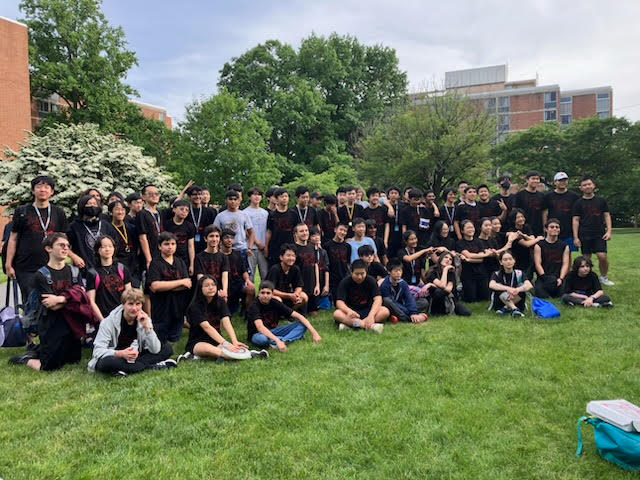
Late nights and early mornings blur for RM students preparing for STEM Olympiads, who often dedicate upwards of seven hours a week outside of school to study. RM offers a wide range of clubs and activities that support the Olympiads, giving students the ability to push themselves out of their comfort zones and explore their interests.“[As a freshman], I just wanted to take it and see what would happen. See how the experience would feel,” junior Sedric Su, United States Physics Olympiad semi-finalist and Physics Club captain, said.
The USA Physics Olympiad, or USAPHO, may seem intimidating for many students, as physics isn’t among the introductory courses of the high school experience. The exam starts with the F=MA exam, where students are given seventy-five minutes to do twenty-five multiple-choice questions. There is a small group of topics, and most of the questions are on mechanics, forces, kinematics and fluid dynamics.
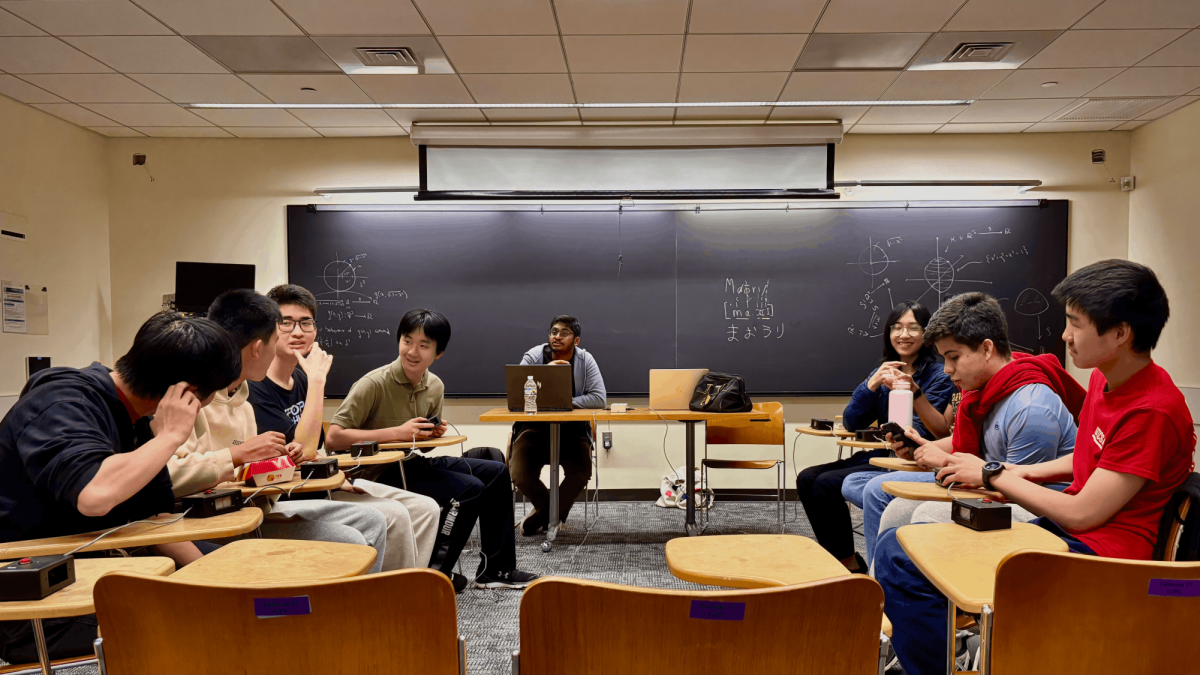
Physics Club is open to new students and encourages participation beyond college applications. Su describes one of his favorite memories at Physics Club, preparing for the exam. “We just pulled up the whiteboard, and sometimes it’s a pretty good deal [of work]. If you’re running out of room, you might just run off the whiteboard. Those experiences were really fun,” Su said.
Additionally, Su believes it encourages and develops important life skills. “It forces you to think outside the box, not only in the exam, but just in life in general,” Su said. “All of these exams teach you how to handle problems and how to think clearly under time pressure.”
USA Biology Olympiad, or USABO, is a comprehensive exam that takes what most students learned in their freshman year to a whole new level. USABO has two stages, starting with an online open exam open to all high schoolers, which around 5,000 students take. The top 10% then move on to the semifinal exam, of which only the top 20 scorers will move on to the USABO National Finals. There, they’ll study at a university and receive intense training, often led by university professors and experts. The top four performers from the National Finals are given a spot on the team that competes in the international competition. The exam normally has five main subjects: Cell biology, animals, plants, ecology and genetics. The quiz format also includes true or false questions, multiple choice, short answer and essay responses.
However, Bessy Albaugh, the teacher sponsor for the Biology Club and proctor for both stages of the Olympiad exams, says that the test can be a wearying experience. “It’s a long test,” she said. “I think the length of it is a bit much, and you have to do two runs, so you have to do the openings and then the semifinal.” This totals to around three hours to complete. During the online section, where Ms. Albaugh proctors the tests on Zoom, students may catch a glimpse of her cat on the screen.
Much of the content in USABO is also extremely advanced and helpful in preparing students for a college-level course. “Some of the stuff that they’ve covered are things that I remember seeing when I was a junior or a senior in college”, Ms. Albaugh said. “The questions definitely prepare them for a college mindset and what a college test would look like.”
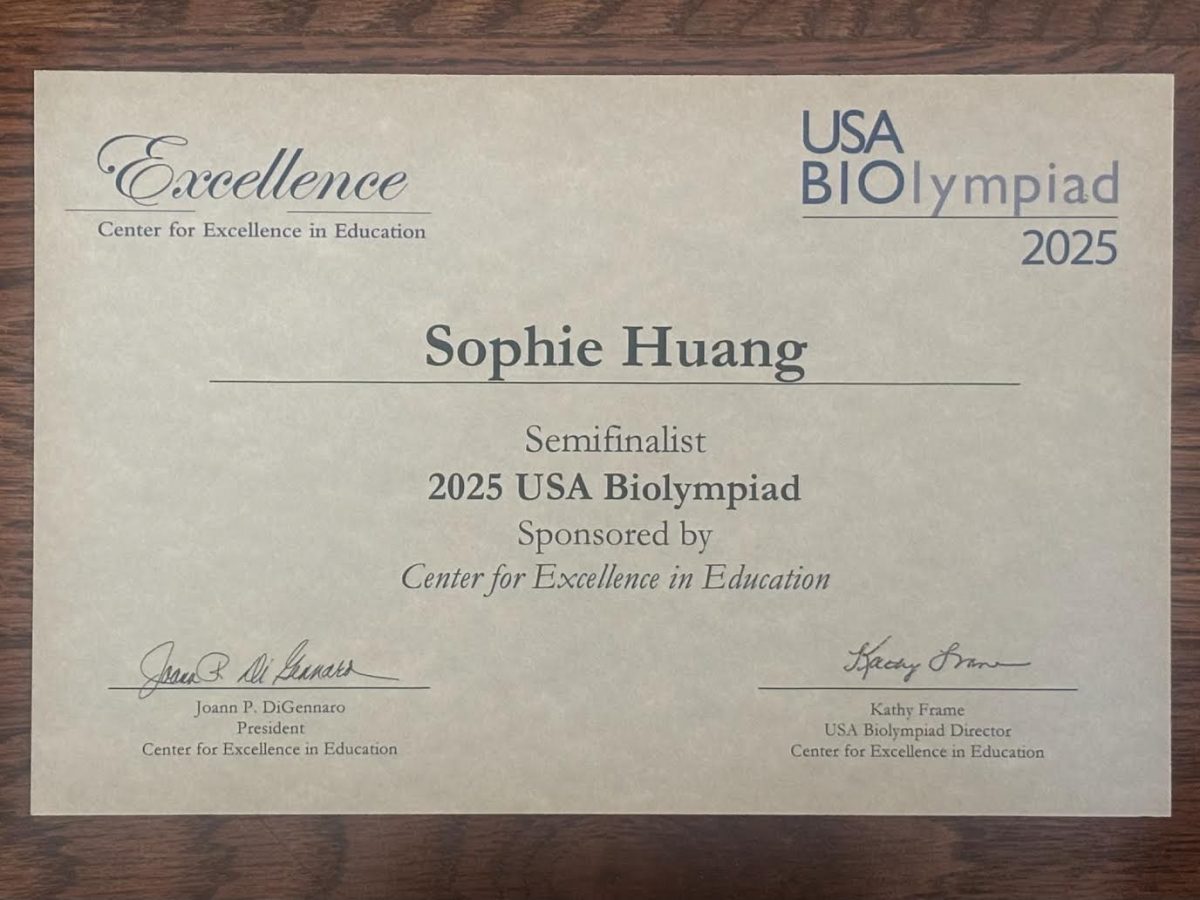
Studying for such a big exam may seem daunting. And so, each student approaches preparation slightly differently, tailoring their methods and routines to help them stay focused and study effectively. “[For studying] I like to use GoodNotes and then I draw up the textbook on one side and then my note sheets on the other side,” senior Sophie Huang, a USABO semi-finalist, said.
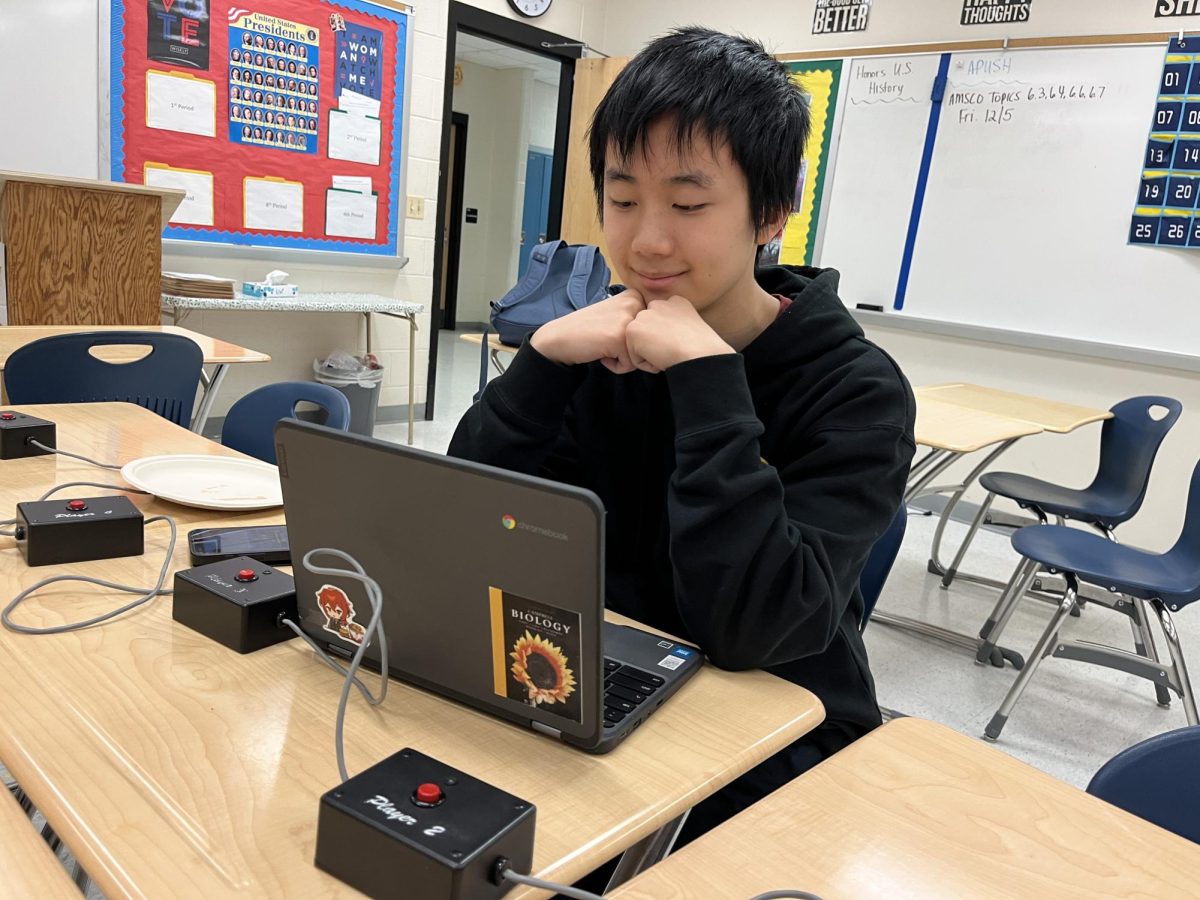
This textbook in question is Campbell’s Biology, coined by Science Olympiad captain and senior Andrew Zhao, a USABO semi-finalist, as the “holy Bible of Biology Olympiad.” He says that you might even find word-for-word descriptions of exam questions in the text.
Huang encourages people to start studying early during the summer. She shares her initial motivation to compete and qualify last year. “I guess just, I finally pulled myself together and was like, okay, maybe I should try it…just shoot your shot,” she said.
Though she says that she’d rather study alone for competitions as intense as these, Huang also heavily supports reaching out to Ms. Albaugh and the Biology club for additional help. “Bio Club does provide a lot of resources, like the textbook, for example, which is really solid in helping you study,” she said. “And for resources, you can always go find Ms. Albaugh for sure.” Students register for the USABO exam through the Biology Club, which also hosts meetings with student lectures and guest speakers to prepare.
Though competing is a large time commitment, ranging anywhere from five to 15 hours a week, both Huang and Zhao say that it has reignited their passion for biology and helped guide them as they head off for college next year. “I didn’t really know what to do, honestly, but this has given me a kind of direction,” Zhao said. “It has let me discover things I actually like by actually immersing myself in a field.”
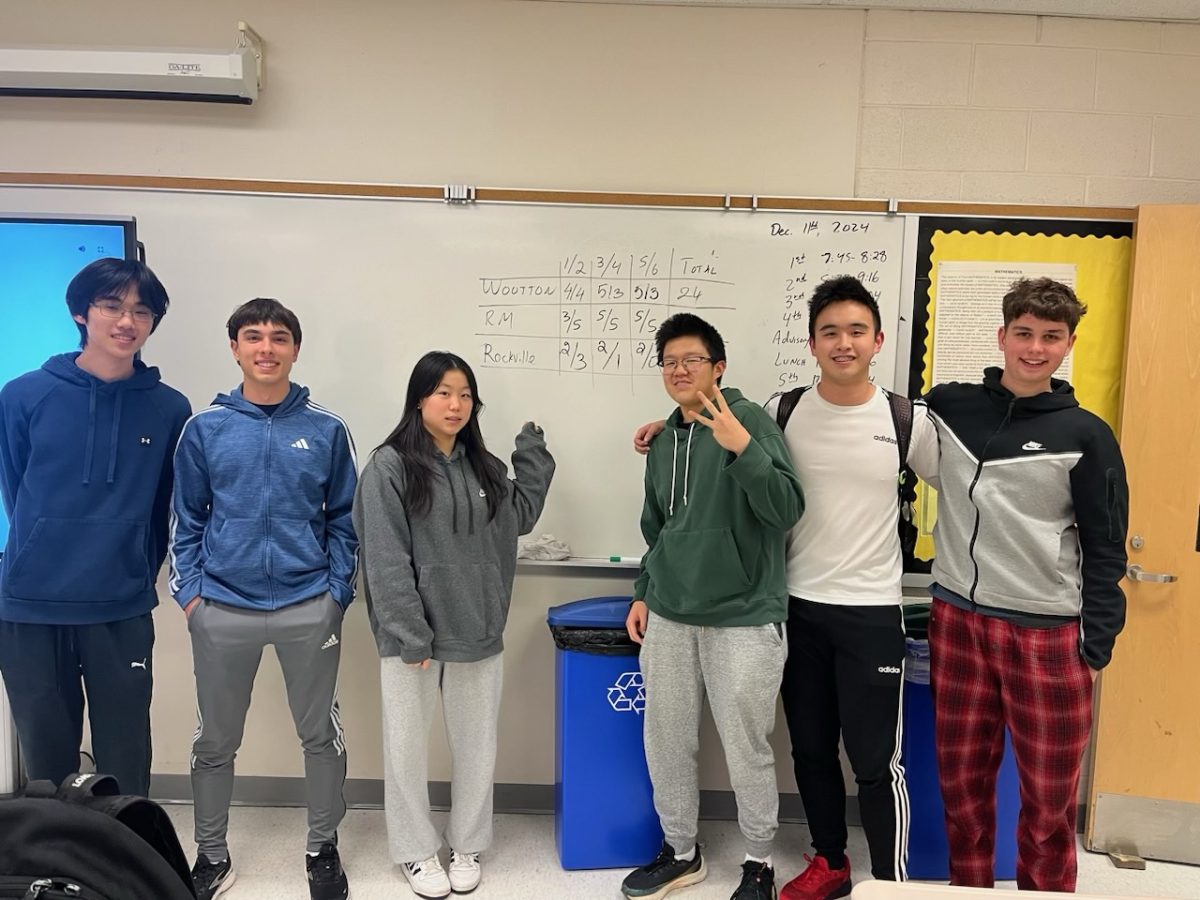
The USA Math Olympiad is known by its participants as one of the hardest Olympiads. “If you’re trying to go for an award, math is the hardest place to start, although I think it’s also the most rewarding because it challenges you as well, so you can learn the most from it,” senior Derek Wang, a Math Team captain and three-time AIME qualifier, said.
The USA Math Olympiad follows a three-part structure: First, the American Mathematics Competition (AMC), which is open to all high school students, though the exam differs between 10th and 12th grade levels. If competitors make the cutoff, usually the top, they take the American Invitational Math Exam, or AIME. Around 260 students then qualify for the nationwide USAMO, where at maximum only six can move onto the International Math Olympiad. However, for many students, USAMO is the last step in their journey—in fact, nobody from RM has made it in around a decade. Despite this, RM students remain determined. “It’s kind of just a nice goal to set for yourself, to motivate you to also keep learning and keep in better shape,” said math team captain senior Ojas Bailey, a two-time qualifier for AIME.
Another common motivation for students to compete is its relevance to college applications. “It’s actually a great extracurricular for college apps,” Bailey said. “Like Carnegie Mellon, they actually have an option to put your AMC 10 and 12 scores in on the common app.” Wang, who plans on applying for college engineering courses, said, “I think it’s more positive for your professional life. I definitely wouldn’t be into engineering if I didn’t do math competitions, because engineering is the real-world scaled-up version of that, so I think that obviously influenced my decision.”
Additionally, Wang says that competing in these Math Olympiads not only pushes you out of your comfort zone and problem-solving skills, but also develops important skills as a student. “I think math is the backbone of a lot of my intellectual process,” Wang said. “I feel like problem-solving has been a huge part of my direction in education and beyond.”
Wang and Bailey both say they’ve put in hours every week and even devoted time over the summer, practicing timing and understanding, and applying theorems. “I felt pretty proud…I thought of the work I’d put in to make the [AIME] qualification happen,” Bailey said.
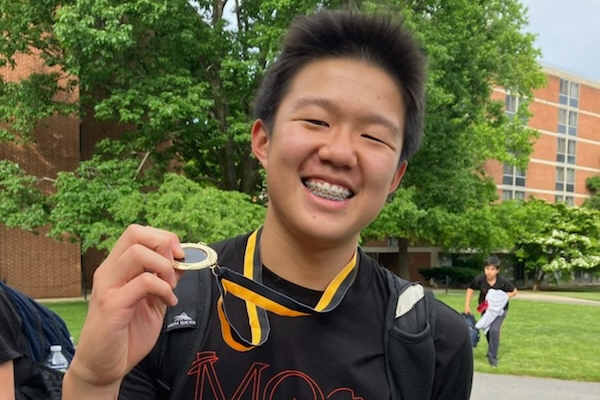
The Richard Montgomery Math Team gives many opportunities for travel to places like the University of Maryland for various competitions, including M-Math or American Regions Mathematics League (ARML). These competitions are valuable practice for AMC and beyond.
The team also provides an inclusive and dedicated environment for those looking to compete. “I think the environment is very open to people who want to join,” Wang said. “Plus, there are a lot of people who are willing to teach you, to be with you, to give you more opportunities to learn.” Wang says that while the group isn’t as large as others in MCPS, their passion makes up for it. He laughed as he recounted an especially funny moment with his team at the Pennsylvania State University math competition. “Last year, the tradition is Penn State has an ice cream place where you can get their own ice cream, and we got there really late, and it was thundering, but we ran over to get ice cream,” he said.
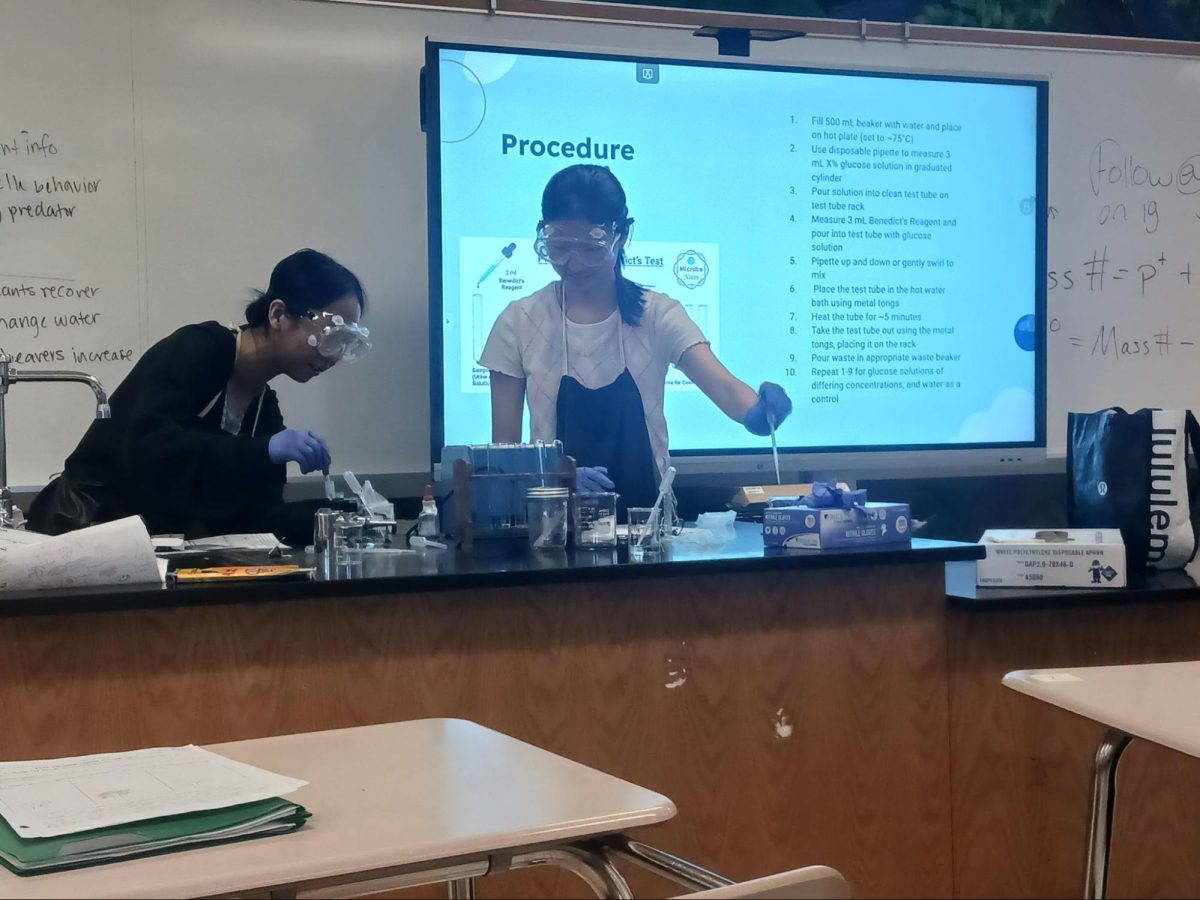
Though chemistry may not be a subject everyone enjoys, those who do choose to revisit it through the United States National Chemistry Olympiad, or USNCO, describe a strong community there. The first step is the Local Chemistry Olympiad Exams, where students register through their local section. For RM students, the section is the Washington D.C. Chemical Society. Following this, students will take the national three-part exam, hosted at local universities or colleges. The top 20 students then attend a rigorous study camp, and four among them are chosen to represent the U.S. at the International Chemistry Olympiad.
Chemistry Club co-president and senior Chelsea Zhu, who competed in her sophomore year, says that while her studying was limited, she enjoyed her time there. “Honestly, I didn’t really study for the exam,” she said. “I mostly took it for fun…and just to explore sciences.” Nevertheless, she says that the experience was extremely beneficial and opened her up to career choices.
She also explains the key support that Chemistry Club offered. “I really hoped to get the opportunity to find a community and perform experiments,” she said. Zhu says that the Chemistry Club community allowed her to expand her knowledge of chemistry and understand its role within the STEM sphere.
A common theme among Olympiad participants was the sense of achievement and community that they get from the Olympiads. “Finding out I was a semi-finalist… made me feel a little bit proud of myself. Made me feel a little bit lucky as well,” Huang said. For some, the individual pride of winning developed into something larger than themselves. “It mainly motivated me to create a culture at RM where the sciences are seen as a collective,” Zhu said. “People can come together to really learn with each other and explore whatever questions or topics or curiosities they have in a shared space.”
If you would like to voice your opinion on an issue you feel is relevant to our community, please do so here. Anyone is able and welcome to submit a Letter to the Editor, regardless of journalistic experience or writing skills. Submissions may be published either online or in a print issue.